

Gratitude for you all
My year of Gratitude is coming to a close. I started this year recoiling from the word “gratitude.” It made me feel selfish, ashamed, and annoyed. It felt like the people who focused on it were holier-than-thou, naïve, or, at best, insincere. But I chose the word because I felt like if I didn’t learn to become more grateful, I’d continue feeling empty and unworthy, no matter how much success I achieved or things I got.
My year of Gratitude is coming to a close. I started this year recoiling from the word “gratitude.” It made me feel selfish, ashamed, and annoyed. It felt like the people who focused on it were holier-than-thou, naïve, or, at best, insincere. But I chose the word because I felt like if I didn’t learn to become more grateful, I’d continue feeling empty and unworthy, no matter how much success I achieved or things I got.
Over this year, I’ve discovered that gratitude is about attention. To experience gratitude is simply to bring my open attention to the myriad things that are happening each day, (each moment!) that are going well, bringing pleasure, and supporting me—rather than always focusing my attention on problems and out-of-reach solutions.
This does not mean I ignore the problems. It simply means that I put them into right balance. I have a truer sense of the whole.
Surprisingly, doing so has given me more joy, more energy, and more capacity to stay with the difficult things, rather than feeling overwhelmed and rundown by them.
Looking over my many gratitude lists from this year, I find myself most grateful for simple things: sunlight, strawberries, snuggles. When I notice and connect with myself, with others, and with the natural world, I feel nourished. I feel rich.
So, I end 2022 by expressing my gratitude for you all. I am so profoundly lucky to have the life and the work that I do, and I thank you for being a part of it.
Stay tuned in January, where I’ll announce my word for 2023, and I gotta tell ya, this one is very different from gratitude, and it’s a doozy.
What was your word of 2022 (or what word would you give it now) and why? What did you learn this year about it? Share your answer in Mother Den.

Danielle LaSusa Ph.D. is a Philosophical Coach, helping new moms grapple with what it means to make a person. She is the creator of The Meaning of Motherhood course, and co-creator and co-host of Think Hard podcast, which brings fun, accessible, philosophical thinking to the real world. To join her mailing list, subscribe here.
© Copyright Danielle LaSusa PhD, LCC, 2021. All rights reserved.

Take 15 Seconds to Feel Better
I was starting to get worried that the end of the year was approaching, and I hadn’t shifted all that much on this year’s theme of “Gratitude.” Thanksgiving would fall flat again this year. Sure, I’d thought about gratitude as a concept a lot, felt little glimmers here and there, but ultimately, I still felt like my life was full of unending to-do lists and piles of laundry.
I was starting to get worried that the end of the year was approaching, and I hadn’t shifted all that much on this year’s theme of “Gratitude.” Thanksgiving would fall flat again this year. Sure, I’d thought about gratitude as a concept a lot, felt little glimmers here and there, but ultimately, I still felt like my life was full of unending to-do lists and piles of laundry.
But recently, I started reading this book that’s taken my gratitude practice to a new level. It’s called Wake Up Grateful. The author Kristi Nelson repeatedly reminds us that, in any moment, there are countless things for which to be grateful: You are alive. Your lungs work. Your heart is beating. You can see, hear, smell. None of these things are guaranteed, and they will not be true forever.
Had it not been for all my other attempts to cultivate gratitude this year, I might have rolled my eyes at such a claim and said, “That’s nice, but I have things to do.” But, those little glimmers from earlier in the year made me want to try this practice.
So, for the past couple weeks, at any random moment of the day, I take about 15 seconds to list as many things as I can think of to be grateful for that are happening right now:
I’m in a warm building. I’m healthy. I have a loving partner and child. My parents are still alive. There is a tree with bright red leaves outside the window. I have a kitchen full of snacks. There’s a mug of hot tea within reach. I can get up and move around, without pain, whenever I want to. I can write these very words, and you, miles away, can read them.
Without fail, by the end of this list, my chest swells with a tender feeling that life really is remarkable. And the more I do this practice, the more I realize that, yes, in fact, there is always a much longer list, (even if I don’t always notice it).
Knowing that the list of blessings is always long feels a bit like a safety blanket, a soft cushion I can always rest on when I need to, and it’s given me a more pervasive sense of wellbeing.
Turns out, maybe all that work I’ve done all year is paying off.
So, I offer this practice to you, and I invite you to share. We’re just over halfway through our 100 Days of Magic in the Mother Den community, in which we are listing 3 things for which we’re grateful everyday until the end of 2022. Come join us! It’s free!
Danielle LaSusa Ph.D. is a Philosophical Coach, helping new moms grapple with what it means to make a person. She is the creator of The Meaning of Motherhood course, and co-creator and co-host of Think Hard podcast, which brings fun, accessible, philosophical thinking to the real world. To join her mailing list, subscribe here.
© Copyright Danielle LaSusa PhD, LCC, 2021. All rights reserved.
What the Dalai Lama Thinks You're Missing
One thing I’ve been wrestling with in working with my theme of Gratitude this year is what you might call the “Pollyanna factor”: gratitude is a syrupy sweet, simple-minded or even damaging version of toxic positivity. “Just smile and look on the bright side,” (she says through gritted teeth).
But, of course, the world has many ills that need real attention. People are suffering, and it feels like the engaged and empathic thing to do is to suffer greatly along with them, not list our blessings.
One thing I’ve been wrestling with in working with my theme of Gratitude this year is what you might call the “Pollyanna factor”: gratitude is a syrupy sweet, simple-minded or even damaging version of toxic positivity. “Just smile and look on the bright side,” (she says through gritted teeth).
But, of course, the world has many ills that need real attention. People are suffering, and it feels like the engaged and empathic thing to do is to suffer greatly along with them, not list our blessings.
In his book, The Art of Happiness in a Troubled World, the Dalai Lama says that, for most of us, the bad things about the world have an out-sized place in our perception of reality. Human brains have evolved to have a negativity bias. (Being on alert for the mountain lion and remembering the horrible incident of the poisonous berries have helped us survive.) But, it also, unfortunately, narrows and limits our scope of reality. Yes, there are heinous crimes reported on the news, but the reason they make the news at all is that the vast majority of people are not doing them. The vast majority of people are caring for their loved ones and saying pleasant hellos to their neighbors.
To ignore the good of life is simply to have a distorted view of the world. It is like the allegory of the blind man who touches an elephant’s wispy tail and concludes that an elephant is like a broom. When you only focus on one part, you end up with a false image of the whole.
And you’re wrong.
To expand your scope and get a fuller, truer vision of the rest of reality, including all those wonderful bits of joy like red autumn leaves, indoor plumbing, snuggles in bed, and community members caring for one another, join 100 Days of Magic for free in the Mother Den community, and list 3 pieces of magic from everyday life from now until the end of 2022.
Danielle LaSusa Ph.D. is a Philosophical Coach, helping new moms grapple with what it means to make a person. She is the creator of The Meaning of Motherhood course, and co-creator and co-host of Think Hard podcast, which brings fun, accessible, philosophical thinking to the real world. To join her mailing list, subscribe here.
© Copyright Danielle LaSusa PhD, LCC, 2021. All rights reserved.

100 Days of Magic
In the month before my 40th birthday, I ran a little experiment to see if a daily gratitude practice would help me get out of a funk. Maybe it was the 2-Year Pandemic blues, but this past March, a heaviness settled on me and lingered there. With the weight of war, mass shootings, Supreme Court rulings, and record high heat, I felt lonely and depressed.
In the month before my 40th birthday, I ran a little experiment to see if a daily gratitude practice would help me get out of a funk. Maybe it was the 2-Year Pandemic blues, but this past March, a heaviness settled on me and lingered there. With the weight of war, mass shootings, Supreme Court rulings, and record high heat, I felt lonely and depressed.
So, inspired by the “woo”-rific book Thank and Grow Rich by Pamela Grout, (with her nod to Napoleon Hill of Think and Grow Rich ), I decided to try texting a short list of 3 blessings to a group of friends every day for 30 days. I sent out a call, and about a dozen of my friends were game. Within the first couple days, several of them started responding with their own list of gratitudes.
We celebrated daily blessings big and small: Oregon strawberries, favorite authors and activists, hummingbirds, morning coffee, new homes, successfully getting grumpy six-year-olds out of the house and watching them finally smile.
Receiving those texts started to become the best thing about my day. They brought a little boost of good news to help balance out all the bad. And as the weeks passed, I noticed a deeper shift: writing and receiving these lists primed me to look for loveliness, delight, and joy. My lists were full of sensory pleasures and natural beauty, little bits of magic all around me. By the time I sent my last text, the day before my birthday, I was feeling pretty damn lucky.
I loved this experiment so much, that I’m running it again, and this time, I want you to be part of it! It’s going to be even bigger this time; it’ll take us all the way to the end of 2022! Join me for:
100 Days of Magic
Starting on Friday, September 23rd, I will post a daily list of 3 delights to a private group in my online community Mother Den every day for 100 days. I invite you to join and post lists of your own!
You are welcome to join me in posting everyday, or just occassionally as your mood, schedule, and energy allows. (If you haven’t downloaded it yet, I recommend getting the Mighty Networks mobile app, so you can dash off a quick list on the go.) Or, you can just join the group to read all the lovely things people are celebrating—you don’t need to post at all!
Imagine what life might feel like if you receive and add to this little daily dose of good vibes and delight. I suspect that we’ll go into 2023 feeling pretty magical.
Oh, and it’s totally free.
Click here for instant access to 100 Days of Magic in the Mother Den community.
Danielle LaSusa Ph.D. is a Philosophical Coach, helping new moms grapple with what it means to make a person. She is the creator of The Meaning of Motherhood course, and co-creator and co-host of Think Hard podcast, which brings fun, accessible, philosophical thinking to the real world. To join her mailing list, subscribe here.
© Copyright Danielle LaSusa PhD, LCC, 2021. All rights reserved.
Damn Lucky
You never know how close you are to something terrible happening. That was the feeling my client struggled with for a long time after enduring life-threatening experiences in her childhood. And, while she’d worked through a lot of her anger and anxiety, she was still struggling with accessing joy.
You never know how close you are to something terrible happening. That was the feeling my client struggled with for a long time after enduring life-threatening experiences in her childhood. And, while she’d worked through a lot of her anger and anxiety, she was still struggling with accessing joy.
“I don’t feel particularly happy or grateful for my life,” she said. Why should she feel grateful, she wondered, for this world in which she survived by dumb accident and tragedy could strike at any moment? For her, the universe is chaotic and uncaring, (evoking philosopher Thomas Hobbes’ claim that life is “nasty, brutish, and short”).
During our session, I asked what we might uncover if we lean even further into life’s randomness but shifted the tone from despair to wonder. “It is by pure chance that our world exists at all,” I said. “Molecules bumping into each other and then, boom, here it is, we’ve got bumble bees. Plants turn light into food! That’s crazy!" I marveled. My client chuckled and agreed, pointing out that we were people talking to each other on laptops from halfway across the world.
“Yes! None of this could be, and yet, by some mystery, it is.” I said. I suggested that rather than forcing ourselves to feel “gratitude,” per se, perhaps we just allow ourselves to sit in wonder at this incredible accident and think: “The fact that I am able to witness this at all is just damn lucky.”
“Damn lucky. I like that,” my client said with a smile. “I think it’s easier to feel damn lucky than grateful.”
She reflected how feeling damn lucky is still joyful and acknowledges the good things in life, but without implying a benevolent source or a deserving and worthy recipient.
So, I offer this practice to you. What do you feel damn lucky to witness? Share your answer in the Mother Den community.
Danielle LaSusa Ph.D. is a Philosophical Coach, helping new moms grapple with what it means to make a person. She is the creator of The Meaning of Motherhood course, and co-creator and co-host of Think Hard podcast, which brings fun, accessible, philosophical thinking to the real world. To join her mailing list, subscribe here.
© Copyright Danielle LaSusa PhD, LCC, 2021. All rights reserved.
A whole new meaning of Mother Earth
Spring has come to Portland, (despite yesterday’s weird spring snow). As the blooming flowers and warm weather returns, I can’t help but feel a twinge of fear at the coming summer. What used to be anticipation of sprinklers, popsicles, and backyard barbecues is now bracing for wildfire smoke, heat domes, and gunshots ringing through the city nights.
Some days, it seems absurd to continue to turn toward my 2022 theme of gratitude.
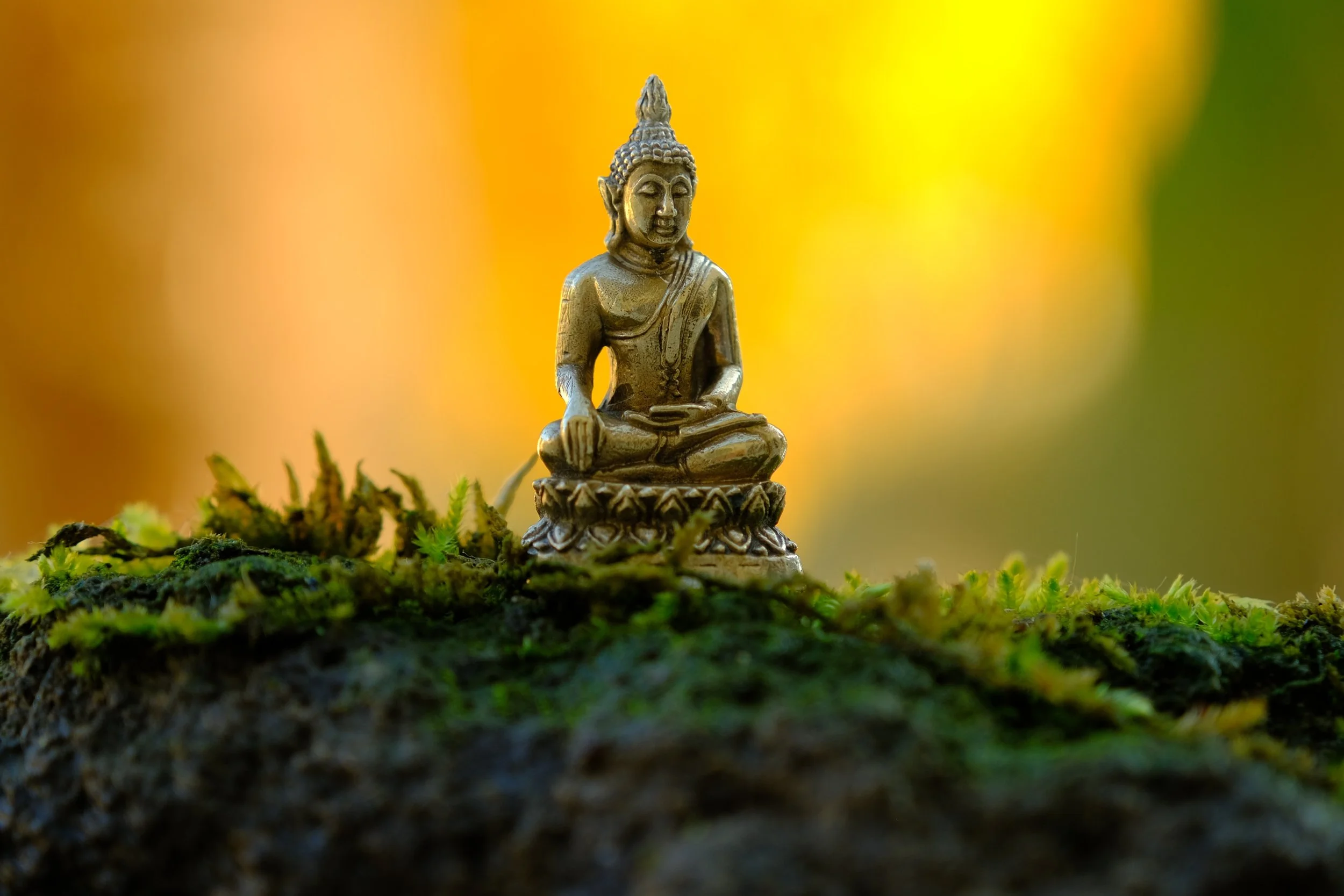
The earth itself played a key role in the Buddha’s enlightenment, or at least that’s how the story goes.* You see, before he became “the Buddha,” Siddhartha was all alone. Originally a prince, he’d left his family, wife, and child to seek spiritual liberation as a forest-dwelling Hindu renunciate. He’d trained for years with the best spiritual gurus of his time, but they had not lead him to ultimate freedom from suffering, and so he’d abandoned them and continued on his own.
Siddhartha was emaciated, dirty, and near starvation after living in extreme asceticism for years. At the end of his rope, he sat down under a tree and vowed that he would not move until he reached full enlightenment.
That’s when Mara, the god of craving, delusion, and death, showed up. After several failed attempts to persuade the would-be Buddha to give up, Mara finally said, “Even if you do reach enlightenment, who is going to witness you?” Mara knew that Siddhartha had no teachers, no friends, no caretakers; his mother had died when he was a baby. It was a deep cut.
But, in his wisdom, Siddhartha reached down and touched the ground, saying, “This earth will witness me.”
That was the moment of his enlightenment.
Whenever I find myself spiraling, feeling lost, unlovable, and alone, I try to say to myself, “This earth is your home. You belong here.” I think of what Buddhist teacher and psychotherapist Tara Brach calls the “gentle hug of gravity” pulling me close to the planet. I think of the story of the Buddha’s enlightenment, and I feel held.
This practice of leaning in to Mother Earth is forging a new kind of relationship to the natural world for me. I feel more and more connected to the birds, the forests, the water, the fungi. I also feel more and more grief for what our society’s way of life has done to our collective home, but also, a greater willingness to look, to see, to do something to help restore this sacred bond between people and planet.
May we all know, deep in our bones, that this earth witnesses us.
In what ways does the earth witness you? Share your answer in the Mother Den community.
* See Mark Epstein’s wonderful book The Trauma of Everyday Life
Danielle LaSusa Ph.D. is a Philosophical Coach, helping new moms grapple with what it means to make a person. She is the creator of The Meaning of Motherhood course, and co-creator and co-host of Think Hard podcast, which brings fun, accessible, philosophical thinking to the real world. To join her mailing list, subscribe here.
© Copyright Danielle LaSusa PhD, LCC, 2021. All rights reserved.
What is breaking your heart?
Spring has come to Portland, (despite yesterday’s weird spring snow). As the blooming flowers and warm weather returns, I can’t help but feel a twinge of fear at the coming summer. What used to be anticipation of sprinklers, popsicles, and backyard barbecues is now bracing for wildfire smoke, heat domes, and gunshots ringing through the city nights.
Some days, it seems absurd to continue to turn toward my 2022 theme of gratitude.
Spring has come to Portland, (despite yesterday’s weird spring snow). As the blooming flowers and warm weather returns, I can’t help but feel a twinge of fear at the coming summer. What used to be anticipation of sprinklers, popsicles, and backyard barbecues is now bracing for wildfire smoke, heat domes, and gunshots ringing through the city nights.
Some days, it seems absurd to continue to turn toward my 2022 theme of gratitude. How dare I feel good when everything is so horrible, when cherry blossoms have become an ominous sign of suffering? When it seems the world is becoming a more dangerous place for my child? When I realize that it has been dangerous for Black, Brown, and poor children around the world in way that I’ve not been forced to see until now, as my own money and privilege have begun to find the limit of what they can provide.
But as I continue to try to turn towards gratitude when I feel overwhelmed by the state of the world, I realize that what I’m really avoiding is grief. A deep, aching, existential grief at the enormous loss. Every beautiful thing will go away—whether through climate catastrophe, or death, or simply the passing of time.
As I try to connect with what is good and lovely right here and right now, I come face to face with my human longing, a desire for a permanent place in a permanent world.
Buddhism tells us this desire for permanence is the source of all human suffering, for to be in a world of change, loss, is to be alive. It is simply the way of things.
This is the strange paradox: The more I try to be grateful, the more I grieve. And the more I grieve, the more grateful I am able to be.
Perhaps this is what Rumi meant when he said “You have to keep breaking your heart until it opens.”
What is breaking your heart open this spring? Share your answer in the Mother Den community.
Danielle LaSusa Ph.D. is a Philosophical Coach, helping new moms grapple with what it means to make a person. She is the creator of The Meaning of Motherhood course, and co-creator and co-host of Think Hard podcast, which brings fun, accessible, philosophical thinking to the real world. To join her mailing list, subscribe here.
© Copyright Danielle LaSusa PhD, LCC, 2021. All rights reserved.
Gratitude Calls Us Back to Pleasure
As I’ve continued to turn towards Gratitude this year, (my chosen theme for 2022), I’ve noticed a clue as to why gratitude is so difficult for so many of us.
The word “gratitude” comes from the Latin gratus which means “thankful” or “pleasing.” While the first part of this definition feels obvious, the “pleasing” part strikes me as being a big part of the challenge of gratitude.
As I’ve continued to turn towards Gratitude this year, (my chosen theme for 2022), I’ve noticed a clue as to why gratitude is so difficult for so many of us.
The word “gratitude” comes from the Latin gratus which means “thankful” or “pleasing.” While the first part of this definition feels obvious, the “pleasing” part strikes me as being a big part of the challenge of gratitude.
Feeling gratitude means, in part, feeling pleasure. It means noticing, affirming, and appreciating the warm, soft, airy, and spacious bodily sensations we feel when we take a hot shower or a delicious bite of food, or smell last night’s rain, or remember a hug from a loved one, or smile at a job well done. Gratitude asks us to notice what we physically experience when we think that this moment is good.
This practice can be complicated for people who have grown up in a culture that teaches us that the body’s experience of pleasure is sinful at worst and unimportant at best. Religious traditions the world over have claimed that the body must be denied, disciplined, and ultimately transcended. In ancient Greece, Socrates claimed that “the body is the prison of the soul.” Western Christian and Enlightenment narratives have reduced women and black and brown people to their bodies, a sign of their inferiority.
I don’t know about you, but for me, all this makes affirming, or even noticing, my body’s sensations of pleasure feels sort of…dangerous. Like doing so makes me stupid, simple or shallow. Perhaps this is why Brené Brown has found joy to be one of the most vulnerable emotions. (Addicts, she notes, are more likely to relapse after an experience of intense joy than intense sorrow.)
And yet, paying attention to those pleasurable sensations is how we actually feel grateful. A practice of gratitude is a call back into the body’s pleasure.
If we want to experience more gratitude, we need to practice noticing, valuing, and lingering in pleasure. We need to allow ourselves to welcome the hum on our skin when it touches soft sheets, the crackle of excitement when we learn something new, the swell of our chests when we watch our kids play. We need to open ourselves to the vulnerability of joy and then to reassert how thankful we are for it.
Do you have a hard time experiencing bodily pleasure? Does it make you feel vulnerable? How do you deal with it? Share your answer in the Mother Den community.
Danielle LaSusa Ph.D. is a Philosophical Coach, helping new moms grapple with what it means to make a person. She is the creator of The Meaning of Motherhood course, and co-creator and co-host of Think Hard podcast, which brings fun, accessible, philosophical thinking to the real world. To join her mailing list, subscribe here.
© Copyright Danielle LaSusa PhD, LCC, 2021. All rights reserved.

What if it could be easy?
If you feel like everything is a struggle, wu wei is a Taoist concept for you. It means “doing without doing” or “effortless effort.” Wu wei describes the way a sailboat crosses a lake, patiently using the natural energy of the wind, gliding silently through the water.
This subtle harnessing of what exists requires a different kind of effort than the strained, painful hustling many of us are used to. I often feel more akin to a motorboat barreling loudly through the surface of a lake, churning up seaweed and spewing gas, just trying to get somewhere else more quickly.
If you feel like everything is a struggle, wu wei is a Taoist concept for you. It means “doing without doing” or “effortless effort.” Wu wei describes the way a sailboat crosses a lake, patiently using the natural energy of the wind, gliding silently through the water.
This subtle harnessing of what exists requires a different kind of effort than the strained, painful hustling many of us are used to. I often feel more akin to a motorboat barreling loudly through the surface of a lake, churning up seaweed and spewing gas, just trying to get somewhere else more quickly.
My 2022 theme of “Gratitude” has me thinking a lot about wu wei and Taosim. Practicing gratitude requires less striving and more joyful acceptance and skillful use of what is given.
This verse from Stephen Mitchell’s translation of Tao Te Ching nicely illustrates the spirit of wu wei. This seminal Taoist text elevates the passive, fluid, receptive, dark, and feminine, what Taoists would call “yin” energy (as opposed to the more active “yang” energy):
“The master allows things to happen.
She shapes events as they come.
She steps out of the way
and let’s the Tao speak for itself.”
The Tao is the self-contained force/existence/natural law of the universe that is at the heart of Taoism. The Tao is both yin and yang. It creates, destroys, and maintains. The Tao is both active energy and the still quiet center that holds all things in balance.
Yet, our society has long been out of balance: it glorifies yang and devalues yin. We are told that anything of value must be hard fought and hard won. Wu wei sounds like laziness, weakness, or childish idealism.
But what if life didn’t have to feel so hard? What if we could be more like water, moving deftly around obstacles and, slowly, patiently, over time, shaping our lives in a way that feels almost effortless? What if we could embrace wu wei? How would your life change?
Share your answer in the Mother Den community.
Danielle LaSusa Ph.D. is a Philosophical Coach, helping new moms grapple with what it means to make a person. She is the creator of The Meaning of Motherhood course, and co-creator and co-host of Think Hard podcast, which brings fun, accessible, philosophical thinking to the real world. To join her mailing list, subscribe here.
© Copyright Danielle LaSusa PhD, LCC, 2021. All rights reserved.
Gratitude and Shame
I chose “Gratitude” as my word for 2022, but, the truth is that I kind of hate the word. When I hear it, I feel a tightening, an inner eye roll that pushes against the Evangelical, Chicken Soup for the Soul sappiness of my youth. Deeper inside, I hear an echo saying “you’re so ungrateful,” followed by a shameful sense that I’m a selfish, privileged, spoiled brat.
Nevertheless, I chose the word “gratitude” as my theme for this year because I want to work with these feelings and make a shift. I’ve been incredibly fortunate in these last few pandemic years, and let’s be honest, for my entire life. But the white supremacist, capitalist addiction to achieve and have more, bigger, better has me focused on what I am lacking, rather than what I have.
I chose “Gratitude” as my word for 2022, but, the truth is that I kind of hate the word. When I hear it, I feel a tightening, an inner eye roll that pushes against the Evangelical, Chicken Soup for the Soul sappiness of my youth. Deeper inside, I hear an echo saying “you’re so ungrateful,” followed by a shameful sense that I’m a selfish, privileged, spoiled brat.
Nevertheless, I chose the word “gratitude” as my theme for this year because I want to work with these feelings and make a shift. I’ve been incredibly fortunate in these last few pandemic years, and let’s be honest, for my entire life. But the white supremacist, capitalist addiction to achieve and have more, bigger, better has me focused on what I am lacking, rather than what I have.
Frankly, that attitude feels pretty insulting, not only to those who, willingly or unwillingly, have helped provide me this cushy existence, but also to the exquisite beauty of life itself. Because, although life can be incredibly cruel and painful, it also gives many opportunities for delight, pleasure, connection, love, wonder and joy. To ignore that beauty is to not see the whole truth.
I’m turning forty years old in 2022, and as I think about my remaining days, I want to more often feel the soft warmth of life-affirming gratitude. Not only will this shift benefit me, but it will give me deeper capacity to engage with others’ pain, to meet the world’s problems from a place of worthiness and love, to consume less and give more, and to use the resources and skills I have to serve the magnificent beings with whom my existence is shared.
What’s your relationship to gratitude? Do you, like me, find it hard to engage with feeling grateful? Contact me or share your answer in the Mother Den community.
Danielle LaSusa Ph.D. is a Philosophical Coach, helping new moms grapple with what it means to make a person. She is the creator of The Meaning of Motherhood course, and co-creator and co-host of Think Hard podcast, which brings fun, accessible, philosophical thinking to the real world. To join her mailing list, subscribe here.
© Copyright Danielle LaSusa PhD, LCC, 2021. All rights reserved.

Courage
In 2021, I finally did an exercise that I’ve asking my clients to do for years, and the outcome surprised me. The exercise is to choose your top two core values from this list from Brené Brown’s Dare to Lead. As I tell my clients, there are plenty of great, important values here, but the task is choose the two that can act as touchstones, anchors, that you can return to again and again to guide your decisions and actions.
I always knew I valued wisdom—after all, “philosopher” means “lover of wisdom”—and, as I thought about all the values that were important to me, I realized that my definition of wisdom had broadened to include not only thoughtfulness, reflection, and critical thinking, but also the wisdom of the body, of the natural world, of the ineffable understanding of lived experience, and all the love, pain, beauty, grief, and compassion there. But the real surprise was the second value I settled on.
In 2021, I finally did an exercise that I’ve been asking my clients to do for years, and the outcome surprised me. The exercise is to choose your top two core values from this list from Brené Brown’s Dare to Lead. As I tell my clients, there are plenty of great, important values here, but the task is choose the two that can act as touchstones, anchors, that you can return to again and again to guide your decisions and actions.
I always knew I valued wisdom—after all, “philosopher” means “lover of wisdom”—and, as I thought about all the values that were important to me, I realized that my definition of wisdom had broadened to include not only thoughtfulness, reflection, and critical thinking, but also the wisdom of the body, of the natural world, of the ineffable understanding of lived experience, and all the love, pain, beauty, grief, and compassion there. But the real surprise was the second value I settled on.
At the end of 2020, I chose a theme or word for the new year, as I’ve been doing for the last few years, and my word for 2021 was “Courage.” I wanted to do some big things in 2021, and I had the intuition that I would need a big whopping dose of courage to do them. I was right.
Within the first couple of weeks of January, I had to summon courage when I told the editor at the New York Times that the final revision of my essay was done and ready to be published. I called upon courage when I shared with my sister some difficult and painful emotions from our childhood and listened to hers; when I waved goodbye to my masked five-year-old on her first day of pandemic kindergarten; when, just a few weeks ago, I sent the first draft of manuscript of my memoir to a literary agent for feedback. (And I even needed a little courage to tell you about that last one.)
Choosing courage as my theme for 2021 made me realize how important of a value it is to me and how much I need it if I am going to live the full expression of my being in this world.
So there you are: My two core values are wisdom and courage. It’s a toss up between Ravenclaw and Gryffindor. (Maybe you all can be my Sorting Hat: Which house would you put me in?)
Next month I’ll share with you my word for 2022, but until then, please tell me your words or themes for 2021 and 2022. Did you have one for this year? What was it? How did it serve you? Have you chosen a word or theme for next year? What is it?
Just respond to this email and I’ll get your reply, or even better, share your answer in my free online community, Mother Den, and see others’ answers.
Danielle LaSusa Ph.D. is a Philosophical Coach, helping new moms grapple with what it means to make a person. She is the creator of The Meaning of Motherhood course, and co-creator and co-host of Think Hard podcast, which brings fun, accessible, philosophical thinking to the real world. To join her mailing list, subscribe here.
© Copyright Danielle LaSusa PhD, LCC, 2021. All rights reserved.
WHY didn't I speak up?!
Early in the pandemic, my then four-year-old daughter and I were out for a walk and happened upon a neighboring house where a massive tree was being cut into pieces and thrown into a wood chipper. She wanted to watch the display, so she sat down in my lap on the sidewalk at the opposite corner of the street. Moments later, an exasperated-looking, middle-aged, white guy on a cell phone, standing next to a BMW, hung up his call and casually wandered over to us, lamenting to me how much the tree removal was costing him. Towering over my daughter and me, he moved closer and closer toward us, seemingly oblivious of our six-foot pandemic bubble of safety, little droplets of invisible spit flying from his unmasked lips. Nodding politely to his rant, I tried, in my cross-legged seat, to inconspicuously inch my daughter and me away from him, silently hoping that he would not step any closer.
Early in the pandemic, my then four-year-old daughter and I were out for a walk and happened upon a neighboring house where a massive tree was being cut into pieces and thrown into a wood chipper. She wanted to watch the display, so she sat down in my lap on the sidewalk at the opposite corner of the street. Moments later, an exasperated-looking, middle-aged, white guy on a cell phone, standing next to a BMW, hung up his call and casually wandered over to us, lamenting to me how much the tree removal was costing him. Towering over my daughter and me, he moved closer and closer toward us, seemingly oblivious of our six-foot pandemic bubble of safety, little droplets of invisible spit flying from his unmasked lips. Nodding politely to his rant, I tried, in my cross-legged seat, to inconspicuously inch my daughter and me away from him, silently hoping that he would not step any closer.
As I leaned backward, watching this guy complain, the thought popped into my head: "Use your words! You need to show your daughter how to use her words," but I couldn't do it. I tried to will myself to speak but nothing came out of my mouth. Days later, I recounted this story to a female friend saying, "This is ridiculous! Am I so socialized not to make a man uncomfortable that I couldn't just say, 'Excuse me, sir, can you please take a step back so that you don't breathe a deadly, new virus all over my child and me?!'"
I've been thinking about this moment a lot while reading Kristin Neff's new book called Fierce Self-Compassion, all about how people—particularly women—can step into our active, sometimes even angry, "mama bear" energy as an expression of our care for ourselves and others. When paired with deep compassion and love, we can use this fierce energy to effectively protect, provide, and motivate.
Based on my experience with Tree Removal Guy, I'd venture to say that I particularly need to tap into that self-compassion in order to get over the barrier of shame that prevents me from doing the right thing. I mean, what was I afraid of? That he would judge me for being pushy or unfeminine? Granted, there are plenty of times that women wisely don't speak up for fear of physical or sexual violence or professional punishment, but, let's be honest, this was not one of those times. Instead, it was a prime opportunity for me to gather my courage, honor my fierceness, and protect myself and my child.
The next time such an opportunity comes around, I plan to seize it.
What are some examples in your life when you have—or haven't—channeled your fierce self-compassionate energy to protect, provide, and motivate? Share your answer in my free online community, Mother Den.
Danielle LaSusa Ph.D. is a Philosophical Coach, helping new moms grapple with what it means to make a person. She is the creator of The Meaning of Motherhood course, and co-creator and co-host of Think Hard podcast, which brings fun, accessible, philosophical thinking to the real world. To join her mailing list, subscribe here.
© Copyright Danielle LaSusa PhD, LCC, 2021. All rights reserved.

Is this dreadful or delightful?
My five-year-old daughter loves spooky Halloween house decor. Last week, we stood for twenty minutes in the drizzling rain, in front of a neighbor's yard, while she delightfully pointed out grinning skeletons, an eight-foot tall, rubber-faced ghoul, and over a dozen bloody-eyed baby dolls hanging from a tree.
Trying to imagine this practice from her fresh eyes, it struck me as curious that our culture has collectively decided to take a month to celebrate death, decay, and all things dreadful.
Most of us, most of the time, organize our lives so that we will not have to encounter the scary realities of the world. We close ourselves off and try to push away the frightful, anxiety-producing, specters that keep us up at night.
My five-year-old daughter loves spooky Halloween house decor. Last week, we stood for twenty minutes in the drizzling rain, in front of a neighbor's yard, while she delightfully pointed out grinning skeletons, an eight-foot tall, rubber-faced ghoul, and over a dozen bloody-eyed baby dolls hanging from a tree.
Trying to imagine this practice from her fresh eyes, it struck me as curious that our culture has collectively decided to take a month to celebrate death, decay, and all things dreadful.
Most of us, most of the time, organize our lives so that we will not have to encounter the scary realities of the world. We close ourselves off and try to push away the frightful, anxiety-producing, specters that keep us up at night.
But I think there's something really instructive and potentially healing about turning toward and honoring the horrifying. The shadow world is where all of our wildest, most untamed demons live: our fears, grief, jealousy, lust, and rage.
If we can learn to revere and revel in them, we open ourselves up to the richness of human vitality and sensuality. When we are willing to face the frightful, we can say "Yes!" to life without reservation. This process is, as the name of the holiday suggests, hallowed—sacred.
So, this Halloween season, I hope you take the invitation to venture into the shadow world to thrash and dance in the bright, ghastly moonlight.
Danielle LaSusa Ph.D. is a Philosophical Coach, helping new moms grapple with what it means to make a person. She is the creator of The Meaning of Motherhood course, and co-creator and co-host of Think Hard podcast, which brings fun, accessible, philosophical thinking to the real world. To join her mailing list, subscribe here.
© Copyright Danielle LaSusa PhD, LCC, 2021. All rights reserved.
Holding the Container
“Who’s holding the container?!” I moaned, my face in my hands. I sat on the living room carpet of a rented beach house, in a circle of half a dozen friends, trying to figure out if I could let myself go. I’d invited them all there for a “grief weekend,” a sort of ridiculous idea I had for a birthday celebration. I wanted to go scream at the ocean, gnash teeth, wail, dance, cry, and release the heaviness that we’d all be carrying after more than a year of quarantine.
On our first night at the beach house, I’d told my friends that I would try to create and hold the safe space “container” of the weekend—where they could feel safe to grieve, share, and be vulnerable—while also simultaneously climbing into the container with them to do my own sharing. “So I may need your help holding the container sometimes,” I said.
One friend chuckled and said she had this image of all of us linking hands in a whirlpool, one person gripping on to the solid edge and the rest, hanging tight, shouting “Who’s holding the container?!”
“Who’s holding the container?!” I moaned, my face in my hands. I sat on the living room carpet of a rented beach house, in a circle of half a dozen friends, trying to figure out if I could let myself go. I’d invited them all there for a “grief weekend,” a sort of ridiculous idea I had for a birthday celebration. I wanted to go scream at the ocean, gnash teeth, wail, dance, cry, and release the heaviness that we’d all be carrying after more than a year of quarantine.
On our first night at the beach house, I’d told my friends that I would try to create and hold the safe space “container” of the weekend—where they could feel safe to grieve, share, and be vulnerable—while also simultaneously climbing into the container with them to do my own sharing. “So I may need your help holding the container sometimes,” I said.
One friend chuckled and said she had this image of all of us linking hands in a whirlpool, one person gripping on to the solid edge and the rest, hanging tight, shouting “Who’s holding the container?!”
The following evening, we were in the midst of our “grief ritual,” in which we, taking turns around a circle, each picked up a stone to speak our grief into it and then dropped into a bowl of water. It was my turn again, and I knew I had some deep, family grief I wanted to speak, but man, wasn’t sure if I could really let myself go into it. I was emotionally drained, my cheeks still wet with the tears from the last round of crying for the warming climate and dying earth.
I let out a big sigh and covered my eyes. “You need someone else to go first?” someone asked. That was when I moaned.
“I’m holding the container!” I heard one person offer. And then, “Me too!” “Yeah, I am!” I looked up and saw all six of my friends around the circle, their arms held up at right angles, palms to me, hearts open. I laughed and my eyes filled with tears. They all grinned.
We all need to be held by others sometimes, particularly when we are often called on to do the holding, as so many mothers and caretakers are. If you want a container in which you can be held, please join me for The Meaning of Motherhood, a six-week online course that is part philosophy class, part motherhood wisdom circle.
Registration opens August 23rd.
Danielle LaSusa Ph.D. is a Philosophical Coach, helping new moms grapple with what it means to make a person. She is the creator of The Meaning of Motherhood course, and co-creator and co-host of Think Hard podcast, which brings fun, accessible, philosophical thinking to the real world. To join her mailing list, subscribe here.
© Copyright Danielle LaSusa PhD, LCC, 2021. All rights reserved.

What Happened to You?
“I heard an interview with Oprah and that neuroscientist she just wrote a book with, who said that the biggest impact on an infant brain is in the first two months of life,” one of my clients, a mother of two young children, said to me last month. “And all I could think for days was: the first two months of life, the first two months of life,” she continued, frantically. “I felt like a ghost their first two months of life. What was I even doing? I barely remember it, I was so sleep deprived!”
More and more research is emerging to confirm the impact of early childhood, pre-natal, and even pre-generational experiences on the developing human brain, (after all, the egg that created a granddaughter was present inside the womb of her fetus mother and pregnant grandmother). Stressful, traumatic, or positive experiences in utero and early infancy become part of the child’s neurology, shaping the way that child sees the world and themselves for years into the future.
“I heard an interview with Oprah and that neuroscientist she just wrote a book with, who said that the biggest impact on an infant brain is in the first two months of life,” one of my clients, a mother of two young children, said to me last month. “And all I could think for days was: the first two months of life, the first two months of life,” she continued, frantically. “I felt like a ghost their first two months of life. What was I even doing? I barely remember it, I was so sleep deprived!”
More and more research is emerging to confirm the impact of early childhood, pre-natal, and even pre-generational experiences on the developing human brain, (after all, the egg that created a granddaughter was present inside the womb of her fetus mother and pregnant grandmother). Stressful, traumatic, or positive experiences in utero and early infancy become part of the child’s neurology, shaping the way that child sees the world and themselves for years into the future.
While new knowledge in epigenetics and neuroscience may be a fascinating evolution in understanding human psychology, it can also be a source of overwhelming stress for new and expectant mothers, as it was for my client—and for me.
My client was doing the thing that I had done for so long: accepting sole responsibility for every instant of her children’s early lives, trying to remember any possible negative experience that may have scarred them forever. This response makes sense in a highly individualist culture, where parents (mothers in particular) are told that they are morally responsible for every aspect of their children’s lives and then sent home to figure it out by themselves without organized or subsidized support.
“Ya know,” I said, “If all this new research is true, you’d think our culture would take better care of pregnant and postpartum mothers and their children.”
“Huh,” she said. “You’re right. I guess I never thought of it that way.”
Without a shift from individual to collective responsibility for our children, the burden for mothers will continue to grow as scientists confirm the lasting impact of adverse experiences on children, grandchildren, and beyond. Until mothers critically consider and reject this burden, we will amplify and reinforce our feelings of failure and not being good enough.
If you want to explore this shift in perspective and many others like it, take my online course The Meaning of Motherhood, which returns this October!
What does this bring up for you? What were your first two months postpartum like? How could our society do a better job of caring for mothers and children?
Come post your thoughts in my free online community Mother Den.
Danielle LaSusa Ph.D. is a Philosophical Coach, helping new moms grapple with what it means to make a person. She is the creator of The Meaning of Motherhood course, and co-creator and co-host of Think Hard podcast, which brings fun, accessible, philosophical thinking to the real world. To join her mailing list, subscribe here.
© Copyright Danielle LaSusa PhD, LCC, 2021. All rights reserved.
The Second Arrow
At a virtual meditation retreat I attended earlier this year, I had a moment of profound insight, or what the Buddhists call prajña. I sat alone in a rented room, trying to focus on my breathing. I found myself thinking about some minor family conflict and felt the tightening in my chest. I tried to get curious. It felt like a small, spindly ball of ice, as if my heart itself had been frozen over. Suddenly a word popped into my mind: Shame. This was the feeling of shame.
Here is the series of thoughts that followed:
Wow, that’s cool. I can identify this feeling. Huh, I should write an essay about this. Yeah—
An essay? God, you always need to show how smart you are, to turn every wound into wisdom, don’t you? You’re always trying to get control! Can’t you just sit here and feel this instead of trying to escape with thoughts of your own superiority? What’s wrong with you?
Oh, my god, look at that critical mind! Why do you always need to beat up on yourself? You’re such a perfectionist! You’re so afraid to just be human! This is why people don’t like you, ya know.
At a virtual meditation retreat I attended earlier this year, I had a moment of profound insight, or what the Buddhists call prajña. I sat alone in a rented room, trying to focus on my breathing. I found myself thinking about some minor family conflict and felt the tightening in my chest. I tried to get curious. It felt like a small, spindly ball of ice, as if my heart itself had been frozen over. Suddenly a word popped into my mind: Shame. This was the feeling of shame.
Here is the series of thoughts that followed:
Wow, that’s cool. I can identify this feeling. Huh, I should write an essay about this. Yeah—
An essay? God, you always need to show how smart you are, to turn every wound into wisdom, don’t you? You’re always trying to get control! Can’t you just sit here and feel this instead of trying to escape with thoughts of your own superiority? What’s wrong with you?
Oh, my god, look at that critical mind! Why do you always need to beat up on yourself? You’re such a perfectionist! You’re so afraid to just be human! This is why people don’t like you, ya know.
All along the pain was just getting tighter and tighter and taking up more and more space in my body, until finally, I reached this place where I just couldn’t criticize myself anymore. It’s like I hit a void of empty space, and I just saw.
I saw how I was being critical for being critical. I was shaming myself for shaming myself. I felt a sad compassion for all of it. That was maybe the first time in my life I was able to accept instead of banish my own internal shaming voice, and see that it too was just a part of being me, and that was ok.
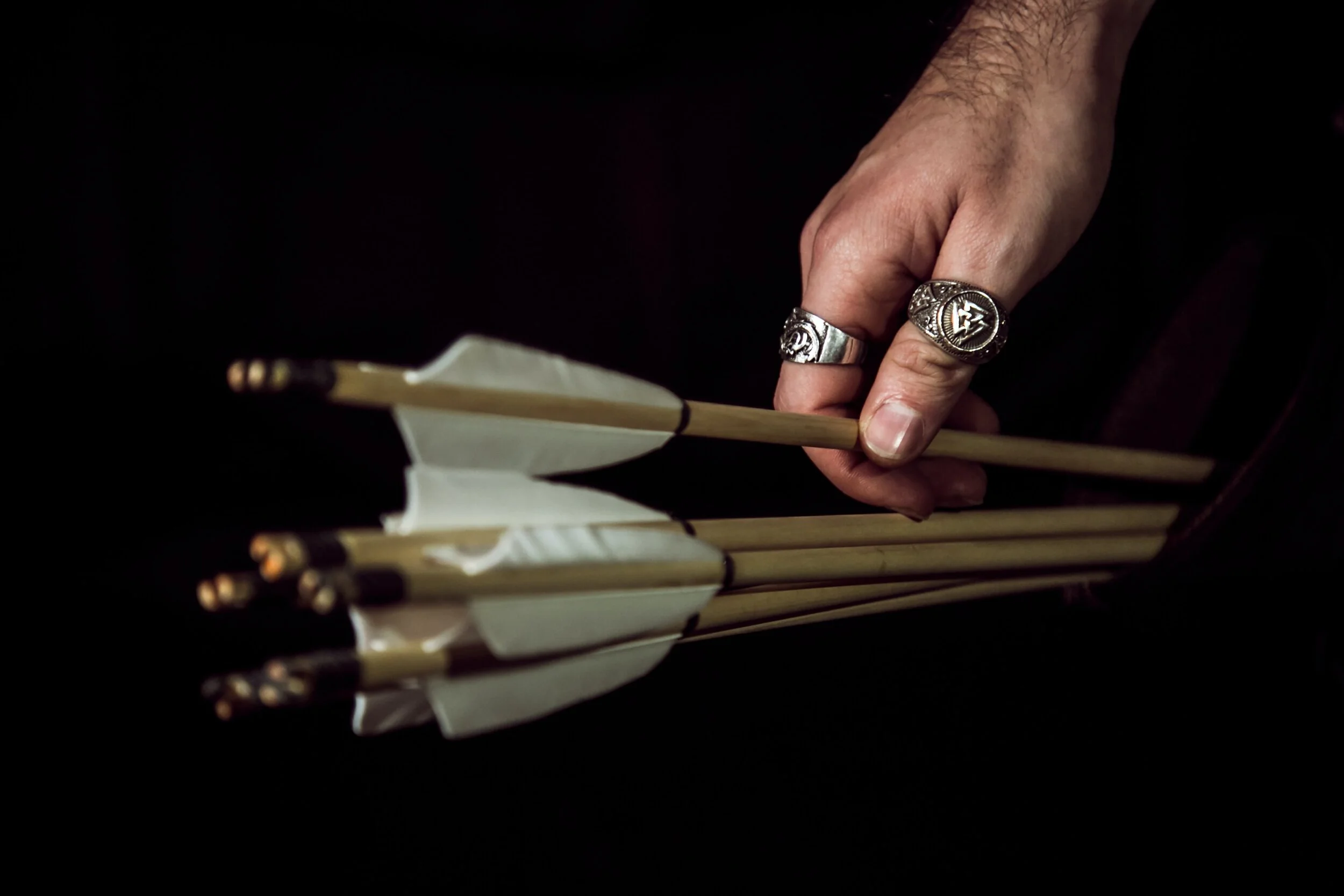
I don’t think I’m alone in this tendency to feel bad for feeling bad. It’s what Buddhists sometimes call the “second arrow.” Feeling anxiety, sadness, anger, shame, etc, they say, is like being struck with an arrow. It hurts. But when we judge ourselves for feeling that way, it’s like we are striking ourselves with a second arrow. And, as you can see, I managed a to throw a third, (and sometimes a fourth and a fifth). We feel ashamed for having shame, thinking, I shouldn't feel this way. The shame itself must be evidence that I am bad/broken/defective.
Revisiting Brené Brown's work, I’ve been comforted by her finding that everyone has shame, with the only exception being people incapable of empathy. Our ability to connect and to care about how other people are thinking and feeling leaves us vulnerable to what they think and feel about us. We're social animals; it comes with the territory.
We live in a culture that’s leveraged and exploited our human capacity for empathy and shame in order to control us. It’s taught us to shame ourselves and each other about everything from the shape of our bodies, to the color of our skin, to our ability to throw a ball, to where our kids sleep. It’s seeped into families, schools, organizations, and businesses, convincing us that we are unworthy and that we should sit down, be quiet, and do what we’re told.
It's really hard to remember that our experience of shame is not a personal failure and it's not evidence of our brokenness. It just means that we have the capacity to care. And if we can tap into that caring, there's real tenderness, and grief, and beauty.
Shame is not inherently bad, it’s just not very effective for living well. It fosters fight, flight, and freeze behavior; we lash out, run away, and shut down. But when we can center the caring behind the shame, we build the confidence and courage to speak out, to ask for what we need, and to work for the change we want to see in the world.
How have you seen the second arrow of shame show up in your life? What are your strategies for centering the caring that lives in the shame?
Come post your thoughts in my free online community Mother Den.
Danielle LaSusa Ph.D. is a Philosophical Coach, helping new moms grapple with what it means to make a person. She is the creator of The Meaning of Motherhood course, and co-creator and co-host of Think Hard podcast, which brings fun, accessible, philosophical thinking to the real world. To join her mailing list, subscribe here.
© Copyright Danielle LaSusa PhD, LCC, 2021. All rights reserved.
Grieving the Missing Village
I’ve been thinking a lot lately about grief; well, that’s not quite honest—I’ve also been feeling a lot of grief. I wouldn’t have even called it grief until just recently; I might’ve called it numbness, anger, inexplicable sorrow. Ya know, just down, without even knowing why.
In The Wild Edge of Sorrow: Rituals of Renewal and the Sacred Work of Grief, Francis Weller says that one of the “gates” of grief is around “what our deep-time ancestors experienced as their birthright, namely, the container of the village. We are born expecting a rich and sensuous relationship with the earth and communal rituals of celebration, grief, and healing that keep us in connection with the sacred.”
I’ve been thinking a lot lately about grief; well, that’s not quite honest—I’ve also been feeling a lot of grief. I wouldn’t have even called it grief until just recently; I might’ve called it numbness, anger, inexplicable sorrow. Ya know, just down, without even knowing why.
In The Wild Edge of Sorrow: Rituals of Renewal and the Sacred Work of Grief, Francis Weller says that one of the “gates” of grief is around “what our deep-time ancestors experienced as their birthright, namely, the container of the village. We are born expecting a rich and sensuous relationship with the earth and communal rituals of celebration, grief, and healing that keep us in connection with the sacred.”
We do not even have language for this loss of what we expected as human beings, deep within our DNA, but did not receive. Our grief and longing for this lost village, Weller says, appears as a general sense of numbness, depression, and disease—without even understanding its source.
A year into this pandemic, I have this sense that the communal grief we are all feeling has opened up a portal into the deeper, more hidden grief that lives in so many of us. For me, it is a pain around this intergenerational loss of the communal village that provides us with a sense of belonging, safety, and wholeness.
Whenever I talk with mothers, and particularly in my Meaning of Motherhood course, it almost always comes up in conversation: It takes a village, and we don’t have a village. Typically, when we reach this moment in the conversation, I feel this sense of powerlessness, anger, and a congested lump in my throat…and then I don’t know what to do.
Turns out, what I need to do is grieve. Deeply. I need to descend into the sacred ground of grief.
For as much as it is a part of human existence, our current social structure lacks pathways for grief, suppressing it into the shadows. But, as Weller says, banished grief blocks us from our human vitality, healing, and connection, our wild aliveness.
“We can recover a faith in grief,” Weller goes on, “that recognizes that grief is not here to take us hostage, but instead to reshape us in some fundamental way, to help us become our mature selves, capable of living in the creative tension between grief and gratitude. In so doing, our hearts are ripened and made available for the great work of loving our lives and this astonishing world.”
So, I am learning to forge a new relationship with grief. To welcome it out of the shadow and into my life. To deeply, loudly, tearfully, publicly mourn the missing communal village, the circle of hands held around a fire, singing to the stars. To accept that this grief is not something to “get over” or “get through” but to walk hand in hand with for the rest of my life. To meet grief with gratitude, and sorrow with song.
What are you grieving? How can we express and move through our grief together?
Danielle LaSusa Ph.D. is a Philosophical Coach, helping new moms grapple with what it means to make a person. She is the creator of The Meaning of Motherhood course, and co-creator and co-host of Think Hard podcast, which brings fun, accessible, philosophical thinking to the real world. To join her mailing list, subscribe here.
© Copyright Danielle LaSusa PhD, LCC, 2021. All rights reserved.
You Are Not a Problem to Be Fixed
I am a recovering self-help junkie.
I have consumed an embarrassing number of self-help books, podcasts, seminars, courses, and retreats, not to mention the hours of therapy, coaching, journaling, meditating, and all manner of efforts toward self-realization. For years, I have treated myself as perpetual self-improvement project, always trying to level up: get up earlier, exercise more, cut out sugar, become a better mother, make more money, consume less, create more, strive until I fall over.
This past January, however, I heard a teaching that has radically shifted the way I think about what it means to be the best version of myself.
I am a recovering self-help junkie.
I have consumed an embarrassing number of self-help books, podcasts, seminars, courses, and retreats, not to mention the hours of therapy, coaching, journaling, meditating, and all manner of efforts toward self-realization. For years, I have treated myself as perpetual self-improvement project, always trying to level up: get up earlier, exercise more, cut out sugar, become a better mother, make more money, consume less, create more, strive until I fall over.
This past January, however, I heard a teaching that has radically shifted the way I think about what it means to be the best version of myself.
While on a virtual meditation retreat, I sat alone, on my cushion for two days, breathing and quietly criticizing my deficient level of focus, of relaxation, of equanimity. I didn’t even realize I was doing it until the teacher said:
“You are not a problem to be fixed.”
You don’t have to do anything, the teacher went on. There’s nothing for you to change about yourself. Whatever happens inside you, happens. Nothing to do. Nothing to change. Nothing to fix.
I burst into tears. Even during meditation, I was still trying to do more, be better, constantly evaluating my performance. To have someone negate the underlying assumption beneath my self-improvement project—that I am a broken, deficient, or defective and in need of repair—allowed me to clearly see the self-loathing at its foundation. I wept for myself.
In the months since, I’ve experimented with this idea that I don’t need to fix myself. Perhaps, my striving toward perpetual improvement actually moves me further away from a sense of well-being. Perhaps my sense of wholeness, happiness, and ease, feels most immediate when I simply affirm the truth: There’s nothing wrong with me.
How would your life change if you believed that you are not a problem to be fixed?
Danielle LaSusa Ph.D. is a Philosophical Coach, helping new moms grapple with what it means to make a person. She is the creator of The Meaning of Motherhood course, and co-creator and co-host of Think Hard podcast, which brings fun, accessible, philosophical thinking to the real world. To join her mailing list, subscribe here.
© Copyright Danielle LaSusa PhD, LCC, 2021. All rights reserved.
Interrupting the Shame-Spiral
If you've ever tried meditating, you may share this experience I've had of realizing I’m lost in thought, and then immediately giving myself a proverbial slap on the wrist: Why can't you focus? You're supposed to be meditating! Man, you're so bad at this. You're never going to achieve inner peace.
Going around this little shame-filled merry-go-round again and again does not exactly make meditation a serene or appealing activity.
If you've ever tried meditating, you may share this experience I've had of realizing I’m lost in thought, and then immediately giving myself a proverbial slap on the wrist: Why can't you focus? You're supposed to be meditating! Man, you're so bad at this. You're never going to achieve inner peace.
Going around this little shame-filled merry-go-round again and again does not exactly make meditation a serene or appealing activity.
But I discovered a little tool that I started using last month when I went on a 4-day virtual meditation retreat. When I catch my mind wandering or ruminating, I immediately respond with a cheerful “Welcome back!” I greet myself as if I were greeting a beloved friend who's returned from a visit. This phrase helps me feel like it's a celebration to be back here, in the room, in my body, in the present moment. It interrupts that barrage of self-criticism and even helps diffuse the negative energy around it. It reminds me that I can be kind to myself.
So, I share that little nugget here with you. What little phrases or tools do you have for interrupting the shame spiral? Come share yours with community members in Mother Den!
Danielle LaSusa Ph.D. is a Philosophical Coach, helping new moms grapple with what it means to make a person. She is the co-creater and co-host of Think Hard podcast, which brings fun, accessible, philosophical thinking to the real world. To join her mailing list, subscribe here.
© Copyright Danielle LaSusa PhD, LCC, 2020. All rights reserved.

My Essay in the New York Times
f you haven't yet, check out my essay published in The New York Times last week: "Death was a Theory, Until I Became A Mother." I am so incredibly grateful to share this work with such a large audience.
The essay reflects on how even my doctorate in existential philosophy did not prepare me for the reckoning with death that I experienced as a mother. But, I left a lot out of that piece. The essay makes no acknowledgement of my race, class, sexuality, physical ability, nationality, etc. and all the privileges my social positions afford, many of which will serve to insulate my child from death and danger. Parents of impoverished and/or black and brown children have to reckon with mortal risks that are significantly higher for their children than for my own.
If you haven't yet, check out my essay published in The New York Times last week: "Death was a Theory, Until I Became A Mother." I am so incredibly grateful to share this work with such a large audience.
The essay reflects on how even my doctorate in existential philosophy did not prepare me for the reckoning with death that I experienced as a mother. But, I left a lot out of that piece. The essay makes no acknowledgement of my race, class, sexuality, physical ability, nationality, etc. and all the privileges my social positions afford, many of which will serve to insulate my child from death and danger. Parents of impoverished and/or black and brown children have to reckon with mortal risks that are significantly higher for their children than for my own.
The truth is, in a lot of ways, death is still a theory for me. By great fortune, I've never experienced first-hand the death of a child. I haven't personally experienced much death, period. Perhaps, it is because of that psychic distance that I'm able to talk about death publicly without being overcome by the grief and pain of such conversations. For me, the fear of death is a low-level anxious hum, which got much louder with the birth of my daughter.
Nevertheless, what I've found in the response to my essay is that I'm not alone. My experience seems to ring true for many people, regardless of their social positioning or their more intimate experiences with death. Indeed, the best part of publishing in the NY Times has been connecting with people who have written and told me that they feel seen and understood by my words.
While my experience differs from others' in important ways, I am so grateful to be having this often hushed and taboo, but incredibly urgent and important, conversation about the heart of being, and making, humans.
If you want to talk about making and being humans, register now for The Meaning of Motherhood, my six-week online course about the philosophical complexities of motherhood. I give philosophical lectures on motherhood every week, and you get to share in intimate conversations about death, grief, time, anxiety, race, class, and motherhood with other fellow travelers. Find comfort, clarity, and community in your motherhood journey, whatever it may be.
Danielle LaSusa Ph.D. is a Philosophical Coach, helping new moms grapple with what it means to make a person. She is the co-creater and co-host of Think Hard podcast, which brings fun, accessible, philosophical thinking to the real world. To join her mailing list, subscribe here.
© Copyright Danielle LaSusa PhD, LCC, 2020. All rights reserved.
Danielle LaSusa, Practical Philosopher

I'm Danielle LaSusa PhD, Philosophical Coach and Consultant. I help individuals and organizations think clearly, choose wisely, and live purposefully. I specialize in serving moms.
Learn More →
Follow Me
Follow me on social media to get up-to-the-minute philosophical wisdom.
What do you do when everything you believe about the world crumbles to pieces around you? How do you rebuild a sense of hope, meaning, and truth? As a philosophy professor and coach, I've thought about these questions a lot, and I’ve learned some things. I gave a TEDx talk at TEDxPCC called, "What to do when you're worldview falls apart." Take a look.