A Wild, Subversive, Powerful Act
After spending dozens of hours over the last month talking with you, my community, about money, wealth, and what is enough for the Prosperity Project, I am more convinced than ever that prosperity is a state of mind.
I spoke with women who have net worths over a million dollars and others who watch their bank balance hover just above zero, all of whom deal with a sense of lack. I found that, regardless of dollar amounts, the feeling of not having enough is almost always rooted in a sense of not being enough.
After spending dozens of hours over the last month talking with you, my community, about money, wealth, and what is enough for the Prosperity Project, I am more convinced than ever that prosperity is a state of mind.
I spoke with women who have net worths over a million dollars and others who watch their bank balance hover just above zero, all of whom deal with a sense of lack. I found that, regardless of dollar amounts, the feeling of not having enough is almost always rooted in a sense of not being enough.
And it’s no wonder. Living in a white supremacist, capitalist patriarchy, we women are told all the time that we are not enough. We are not pretty enough, thin enough, young enough. We are not smart, sexy, kind, nurturing, courageous, rebellious, well-behaved, or good enough. We do not do enough as professionals, as mothers, as friends, wives, sisters, daughters.
We become convinced of our deficiency, and then we’re sold new shoes, face creams, time management systems, and self-help books, all promising to make up the difference. (Yes, myself included. Face creams in my bathroom and self-help books on my nightstand.)
It is damn near impossible to feel prosperous, let alone generous, when you are in such a perpetual feeling of lack.
So what’s to be done?
As I spoke with one woman after the next, I saw in so many of us a disconnection from the deep, wise, part of our ourselves that I believe knows the truth: our existence alone is enough.
I didn’t always believe this, but now, more and more, I believe that each of us is like plant, a songbird, a little baby pup: we are simply part of the exquisite expression of life. We don’t need to do anything to earn our keep. We don’t even need the face creams. (I know, radical.)
Learning to believe that you are enough, you do enough, and you have enough—just as you are—is a wild, subversive, powerful act.
As I tell my clients, our work together is not a self-improvement project; it is a self-acceptance project. And the more you root into your own inherent value, you deeply feel all you have and all you have to give.
Weekly Gifts
I’ve decided this year to work on my theme of Generosity by giving at least one gift every week of the year, and to chronicle and reflect on them here.
Week 3, Jan 15-21: I gave a tip when ordering lunch from a counter, felt ambivalent about it, and thought about this NPR story of the angst around tipping.
Week 4, Jan 22-28: I sent a new year’s gift to a client, and got such a joyful and delighted response, it makes me want to send gifts to everyone I know.
Week 5, Jan 29- Feb 4: I gave a talk called “Learning to Rebuild After Your Worldview Falls Apart,” to Cheetah House, a non-profit devoted to helping meditators in distress, and decided to donate the talk rather than accept the honorarium offered for it.
Week 6, Feb 5-11: I sent an encouraging email to someone who finds himself in a tough place, and was moved when he called to thank me for it. Both parts of that exchange feel like gifts to me.
What is your relationship to “enough”? Share your answer in Mother Den.

Danielle LaSusa Ph.D. is a Philosophical Coach, helping new moms grapple with what it means to make a person. She is the creator of The Meaning of Motherhood course, which explores the changes in identity, meaning, and wisdom that come with motherhood. To join her mailing list, subscribe here.
© Copyright Danielle LaSusa PhD, LCC, 2021. All rights reserved.

Of Greed and Raspberries
Happy 2024, ya’ll! So, my theme of the year is Generosity.
I chose to work with Generosity this year because there were some patterns in myself I didn’t particularly like. I noticed, for example, last summer I’d get all prickly inside when my kid’s friend came over and, during snack time, ate nearly the entire box of raspberries I just bought.
I mean, sure that’s annoying. But, my reaction was more than just annoyed. I felt indignant. Like, angry. With a seven-year-old. Inside, I was Gollum, wanting to snatch the raspberries off the table and hide in the basement, wrapped around my precious fruit, elbows pointed out, snarling at anyone who looks my way.
Not my proudest moment.
Happy 2024, ya’ll! So, my theme of the year is Generosity.
I chose to work with Generosity this year because there were some patterns in myself I didn’t particularly like. I noticed, for example, last summer I’d get all prickly inside when my kid’s friend came over and, during snack time, ate nearly the entire box of raspberries I just bought.
I mean, sure that’s annoying. But, my reaction was more than just annoyed. I felt indignant. Like, angry. With a seven-year-old. Inside, I was Gollum, wanting to snatch the raspberries off the table and hide in the basement, wrapped around my precious fruit, elbows pointed out, snarling at anyone who looks my way.
Not my proudest moment.
In her remarkable book The Soul of Money, Lynne Twist writes that the first toxic money myth is that “There’s not enough.” This scarcity mindset can infuse our attitudes not only about money, but also about time, space, power, attention, love, clothes, stuff, food, and yes, raspberries. Scarcity grips us from the moment we wake up in the morning, (thinking, “I didn’t get enough sleep”) to the time we go to bed, (thinking, “I didn’t get enough done”).
Twist goes on to say that the scarcity mindset not only keeps us feeling depleted and tense, but also pushes us to act in ways we’re not proud of. We’re so concerned about protecting us and ours that we will do whatever it takes to not be the ones left without. This is how we end up with systems that hoard resources and deny opportunities to people.
I’m not quite sure how we get out of scarcity mindset, but it seems to require broadening our scope. True, maybe I didn’t get to eat those raspberries now, but, honestly, I could always get more later. (As an adult, I have much more control over my powers of fruit acquisition than a child does.) Or maybe I don’t get the raspberries at all, but I have lots of other food I can have. Maybe, in a karmic sense, it all evens out in the end. Maybe the real lesson is to practice gratitude for the things I do have.
Weekly Gifts
I’ve decided this year to work on my theme of Generosity by giving at least one gift every week of the year, and to chronicle and reflect on them here.
Week 1, Jan 1-7: It seems sort of lame to start with a gift to myself, but this was accidental. I decided try out Liz Gilbert’s daily practice of writing a two-way letter to and from Love. My letter to myself from Love felt more like a gift than anything I’ve received in a long while.
Week 2, Jan 8-14: I gave three Prosperity Project sessions this week, which, to be honest, feels more like a mutual exchange. When people are so vulnerable in telling their stories, are willing to give me their trust, and are able to work through this tough and complicated thing called life with me, that is a real gift too.
My husband and I also gave breakfast to the neighbor and her five-year-old who stopped by while playing outside in the Portland snow storm on Saturday.
And yes, as I refilled the little one’s bowl of crackers, I had to breathe and remind myself that we had plenty to go around.
I’m working on it.
When was a moment you felt the scarcity mindset grip you? What do you think the way out is? Share your answer in Mother Den.
Danielle LaSusa Ph.D. is a Philosophical Coach, helping new moms grapple with what it means to make a person. She is the creator of The Meaning of Motherhood course, which explores the changes in identity, meaning, and wisdom that come with motherhood. To join her mailing list, subscribe here.
© Copyright Danielle LaSusa PhD, LCC, 2021. All rights reserved.

My Inner Critic Looks Like This
Last month, during a writing incubator program, my fellow writers and I were asked to name, draw a picture of, and describe our inner critics. Clearly, this exercise was meant to identify the part of ourselves that judged our creative work, but the only thing I could think about was the inner voice that criticizes my mothering.
I named her Bethilzda. I described her as an old witch, draped in black, hissing in my ear, “You’re fucking it up. Your daughter’s going to hate you. ”
Last month, during a writing incubator program, my fellow writers and I were asked to name, draw a picture of, and describe our inner critics. Clearly, this exercise was meant to identify the part of ourselves that judged our creative work, but the only thing I could think about was the inner voice that criticizes my mothering.

My drawing of Bethilzda from my journal
I named her Bethilzda. I described her as an old witch, draped in black, hissing in my ear, “You’re fucking it up. Your daughter’s going to hate you. ”
I have been thinking a lot about Bethilzda these days. This inner mothering critic of mine seems to have two core beliefs:
1. A good mother, (the kind of mother I could be if I only tried harder), is someone who is infinitely patient, kind, present, and fun, with perfectly healthy boundaries, perfectly attuned empathy, and who never loses her temper, yells, walks away in anger, or reacts out of her old conditioned patterns.
2. If, and only if, I am a good mother, as defined above, will my daughter feel mentally well and have a loving and communicative relationship with me.
Every time I fail to live up to these standards, which is, ya know, many times a day, Bethilzda takes it upon herself to let me know.
She’s a real treat, that Bethilzda.
And it’s only recently, propelled by my year of Truth, that I’ve been able to note when she’s talking. For years, I’ve been caught under her spell, uncritically believing what she says—lost in what psychologist and Buddhist teacher Tara Brach calls “the trance” of my own stories.
Unfortunately, I’m learning that I am actually pretty committed to Bethilzda’s outrageous stories, even though they make me feel like shit. The problem is that they also seductively dangle before me a version of who I could be, who I want to believe I am: If I just tried harder, I could be that “good mother” who is perfectly attuned to her child. Perfection is within my reach!
In his terrific book Soul Without Shame Byron Brown says, “One of the main reasons you do not recognize or pursue your ability to know the truth (and thereby be in touch with reality) is that knowing the truth in your experience often contradicts your need to maintain certain beliefs about yourself.”
Flawlessness and failure are two edges of the same sword. In order to stop feeling inadequate, I have to also reject the image I have of myself as potentially perfect. I need to see the truth: Sometimes I am empathetic, patient, and calm and hold clear boundaries with compassion and firmness—and sometimes I am short-tempered, myopic, inconsistent, needy, and lost in my own childhood wounds. I’m just an imperfect human being who loves her kid a lot and is trying her best.
But as long as I’m listening to Bethilzda hissing in my ear, it’s nearly impossible for me to really see what’s happening.
And so, I continue to try to notice her, to question her stories, to breathe. And occasionally, when I’m feeling really grounded, I roll my eyes and tell her to just shut the fuck up.
Who is your mothering inner critic? How would you name, describe, and draw that voice inside you? Share your answer in Mother Den.
Danielle LaSusa Ph.D. is a Philosophical Coach, helping new moms grapple with what it means to make a person. She is the creator of The Meaning of Motherhood course, which explores the changes in identity, meaning, and wisdom that come with motherhood. To join her mailing list, subscribe here.
© Copyright Danielle LaSusa PhD, LCC, 2021. All rights reserved.

What I Learned From My Digital Detox
I am three weeks into a four-week “digital fast,” in which I stay completely off social media and refrain from consuming all audio and video streaming content, with few exceptions. (For all you sticklers, I’ve allowed myself music, exercise videos, and one hour a week to watch TV with my family.) This is my third such break from digital consumption I’ve taken this year. And it’s really helped me connect with my 2023 theme of Truth.
I was inspired to try this digital detox after returning from a week-long meditation retreat in late 2022. Before then, reducing screen time was something I felt like I should do. As I zoned out on TikTok, there was always this voice chattering in my head saying, You know, this isn’t good for you. You really should pay more attention to your kid. You’re wasting your time by lining tech bro pockets.
I am three weeks into a four-week “digital fast,” in which I stay completely off social media and refrain from consuming all audio and video streaming content, with few exceptions. (For all you sticklers, I’ve allowed myself music, exercise videos, and one hour a week to watch TV with my family.) This is my third such break from digital consumption I’ve taken this year. And it’s really helped me connect with my 2023 theme of Truth.
I was inspired to try this digital detox after returning from a week-long meditation retreat in late 2022. Before then, reducing screen time was something I felt like I should do. As I zoned out on TikTok, there was always this voice chattering in my head saying, You know, this isn’t good for you. You really should pay more attention to your kid. You’re wasting your time by lining tech bro pockets.
And so I felt bad about myself and all the streaming content, but, honestly, I didn’t really want to stop. I mean, it’s the internet. It has so many things. You get it.
But something shifted for me after that meditation retreat. After a week of just being with myself—even through meals, chores, and of course, hours of sitting—I stopped thinking of reducing my screen time as something that I should do in order to be a “better person.” Instead, I started to think of it as something I wanted to do to more deeply engage with my real life.
Luckily, my real life involves fulfilling work and time with loved ones, but it also involves things like chopping carrots, and washing dishes, and putting laundry away. You know, boring things. Lots of them. Prime activities for a nice distracting audiobook or reality TV show.
But I’ve found that when I abstain from those screens, my restless mind will hunt for interesting things elsewhere. So, while I wash dishes, I look out my kitchen window. Turns out, there are hummingbirds out there. And roses bushes. And pink clouds in a honey-colored sky. And breath.
When I’m bored enough, I’ll pay attention to the smell of carrots, and their bright orange color, and the feel of the knobby root under my fingers.
And the world seems to become more vibrant.
And I feel closer to it.
Don’t get me wrong. Sometimes it sucks. I’ve realized that I often turn on a podcast or show when I’m feeling something I don’t want to feel: regret, shame, anger, loneliness, (especially loneliness).
When I can’t just hit the play button, I have to actually pay attention to the feelings, turn toward them, and ask them what they are trying to tell me. And that is often not so comfy.
But, strangely, after a month off digital streaming, I felt like I reunited with an old friend—in myself. I also started reaching out to other friends more, and that has deepened my relationships. I felt noticeably happier, more grounded, less stressed.
All that said, a part of me is still really looking forward to when these four weeks are over and I can binge season 4 of Sex Education. But another part of me feels a little sad about turning away from the pink clouds and that old friend inside my skin, and worried about how I’m going to find more balance in it all.
I trust that with time, I’ll turn more and more often, toward the Truth.
Have you ever done, or wanted to do, a digital cleanse? Share your answer in Mother Den.
Danielle LaSusa Ph.D. is a Philosophical Coach, helping new moms grapple with what it means to make a person. She is the creator of The Meaning of Motherhood course, which explores the changes in identity, meaning, and wisdom that come with motherhood. To join her mailing list, subscribe here.
© Copyright Danielle LaSusa PhD, LCC, 2021. All rights reserved.

Slip Like Bacon Grease
“I feel like I just drank forty ounces of bacon grease,” a client said to me the other day near the end of our session.
I laughed. “What does that mean?” I asked.
“Well, this belief coming out of me, one way or the other.”
We’d spent the session talking about how she longed to live bigger into what she felt called to do in the world, but she feared letting her full self be seen. She worried about what others—her family, friends, neighbors—would think of her. We identified a belief that was operating under the surface, (the one she later said was bound to come out): Hiding my whole, true self keeps me safe and loved. It’s a belief that is familiar to many of us.
“I feel like I just drank forty ounces of bacon grease,” a client said to me the other day near the end of our session.
I laughed. “What does that mean?” I asked.
“Well, this belief coming out of me, one way or the other.”
We’d spent the session talking about how she longed to live bigger into what she felt called to do in the world, but she feared letting her full self be seen. She worried about what others—her family, friends, neighbors—would think of her. We identified a belief that was operating under the surface, (the one she later said was bound to come out): Hiding my whole, true self keeps me safe and loved. It’s a belief that is familiar to many of us.
Seeing that this belief was blocking her way, I asked her a series of simple questions about it, (questions borrowed from Byron Katie’s work):
Question 1: “Is it true?”
My client said that she really didn’t know. Yes, she had learned in subtle ways from her family to keep herself hidden. It’d protected her in some ways, but did it really keep her safe? Was staying small the only way to be loved? She wasn’t sure.
Question 2: “What’s the impact of this belief?”
This belief made her feel sad, anxious, trapped, resentful, and lonely. She blamed herself for having such weird interests and talents. She felt like no one really saw and knew all of her.
Question 3: “How would you feel if you didn’t have this belief?”
My client sighed with relief and said that, if this belief were magically gone, she would feel lighter, freer, more energized, open, and connected.
I looked at her, seeing the pain she was in. “This belief is controlling your life. And you don’t even know that it’s true,” I said.
“Yeah….” We sat quietly together for a minute. That’s when I asked her how she felt and she gave me the line about bacon grease.
So many of us are suffering, held hostage by beliefs that we rationally know are not even true. Of course, the problem is that even though we may, logically, understand the truth, our emotional child selves still feel afraid.
If we connect with the inner wisdom of our bodies—the deep part of us that knows that we are whole, connected, and free—we can kindly, compassionately, and repeatedly reassure our child selves that we are safe. We know the truth.
Eventually, those false beliefs will pass through our systems—like so much bacon grease.
What false belief is holding you hostage? Share your answer in Mother Den.
Danielle LaSusa Ph.D. is a Philosophical Coach, helping new moms grapple with what it means to make a person. She is the creator of The Meaning of Motherhood course, which explores the changes in identity, meaning, and wisdom that come with motherhood. To join her mailing list, subscribe here.
© Copyright Danielle LaSusa PhD, LCC, 2021. All rights reserved.

The Ant and the Whale
One morning, on one of this summer’s family camping trips, my seven-year-old, still in her sleeping bag, hit me with this one: “Mom, if this pillow is giant to an ant, but small to whale, what size is it really?”
Boom. She is definitely the child of a philosopher. (Also, she’s been loving this kid’s book on philosophy that I got her from the library, so maybe she was inspired.)
My kiddo’s question was about “epistemic relativism,” a ten-dollar philosophy phrase meaning that the world looks—and thus, perhaps, actually is— radically different from one person (or animal) to the next. In other words, it raises the question of whether there is any objective truth about reality at all.
One morning, on one of this summer’s family camping trips, my seven-year-old, still in her sleeping bag, hit me with this one: “Mom, if this pillow is giant to an ant, but small to whale, what size is it really?”
Boom. She is definitely the child of a philosopher. (Also, she’s been loving this kid’s book on philosophy that I got her from the library, so maybe she was inspired.)
My kiddo’s question was about “epistemic relativism,” a ten-dollar philosophy phrase meaning that the world looks—and thus, perhaps, actually is— radically different from one person (or animal) to the next. In other words, it raises the question of whether there is any objective truth about reality at all.
Of course, our current political climate is full of folks who have really leveraged this philosophical problem in service of gaining power. “Alternative facts,” “fake news,” you know the drill. It’s being used as a manipulation tool and has thrust us into this dizzying, Orwellian moment.
But despite its dangers, I find that reminding myself that the world looks different to each of us to be incredibly helpful, particularly when I am really attached to my own version of the truth about my mothering.
In those moments that I am convinced that I’m irredeemably failing and fucking up my child, I try to remember that I’m projecting my perspective—all of my own childhood wounds and the decades of subsequent experiences—onto her. I have a whole story in my head about what she thinks of me now, what she will think of me in ten or twenty years, what she believes or doesn’t believe about herself and all the ways in which she will blame me for it.
But, for all I know, I am an ant and she is a whale.
I really have no idea what it is like inside her mind. She’s seven. I imagine it looks like a Willy Wonka fever dream in there.
And it is so bizarre, and painful, to think that she sees the world radically different from me, especially because she literally used to be inside of me. I love her so much and want to protect her completely—so much so that I pretend to be inside her head.
But her human experience is her own. And all I can do is see it from the outside. And tend to my own human feelings, thoughts, and emotions.
And if the day comes, (and let’s face it, it probably will), when my kid tells me about the ways in which she felt let down by my parenting, it will still be my job to stay with my own experience and to remind myself that each of us has our own perspective, our own truth, our own world.
When is it helpful for you to remember that each of us sees the world differently? Share your answer in Mother Den.
Danielle LaSusa Ph.D. is a Philosophical Coach, helping new moms grapple with what it means to make a person. She is the creator of The Meaning of Motherhood course, which explores the changes in identity, meaning, and wisdom that come with motherhood. To join her mailing list, subscribe here.
© Copyright Danielle LaSusa PhD, LCC, 2021. All rights reserved.

What is True?
Well, my Year of 40 is officially over! I had so many wonderful conversations with y’all about how to live deeply into our wild and precious lives. Thank you so much for sharing your stories with me.
And now, I am going to be 41 in a few days. (Time just keeps moving, doesn’t it?) One nice thing about a summer birthday it is that it offers a natural mid-year reflection point.
Well, my Year of 40 is officially over! I had so many wonderful conversations with y’all about how to live deeply into our wild and precious lives. Thank you so much for sharing your stories with me.
And now, I am going to be 41 in a few days. (Time just keeps moving, doesn’t it?) One nice thing about a summer birthday it is that it offers a natural mid-year reflection point.
In looking back over my reflections on this year’s theme of “Truth,” I’m realizing that I’ve broken a cardinal rule in philosophical discourse, which is to start with definitions! What—you may be wondering—do I even mean by “Truth?”
As a philosopher, of course, I know that “truth” is a loaded word. It may be one of the most significant words in the history of philosophy, embedded in thousands of years of questions: What is true? Can we ever know the truth? If so, how? Is truth singular and absolute or plural and relative? Is the knowledge of truth helpful or harmful?
My selection of Truth as this year’s theme was instinctively bound up with a desire for awakening: an urge to be more fully present with my experience of life, without constantly needing to overlay it with extra interpretation and judgment. I just got so tired of my old broken record stories and my constant need for entertainment and distraction from them.
So, I’ve been operating from a very personal definition of truth, asking myself: What is true, for me, in this moment?
There are, of course, billions of things that are true for me in any moment, and my practice has been to pay more attention to just some of them: the sensations inside my body; the smells, colors, and sounds around me; the thoughts that flicker through my head; the desires that pull at my heart. I try to see them as a curious witness or observing scientist might see them, without getting sucked in, so I can see the truth of them more clearly.
Now, six months in to this Truth experiment, I’m noticing how much annoying self-talk I have and how little I’ve been paying attention to anything else. But, I’ve also gotten a little taste of how much bigger and more interesting life is beyond that constant inner chatter.
I’ve even started to have moments when I spontaneously just notice where I am and what I’m doing in a way that feels totally fresh, alive, immediate. It is like I’ve been given an unexpected celebration: Hey! You’re here! Isn’t it amazing?!
It usually lasts for about two seconds, and then that broken record starts skipping away again, but left behind is the promise that I could have more moments like that, that my life could feel that way more of the time.
So I keep asking myself: What is true? What is true? What is true?
What is true for you, in this moment? Share your answer in Mother Den.
Danielle LaSusa Ph.D. is a Philosophical Coach, helping new moms grapple with what it means to make a person. She is the creator of The Meaning of Motherhood course, which explores the changes in identity, meaning, and wisdom that come with motherhood. To join her mailing list, subscribe here.
© Copyright Danielle LaSusa PhD, LCC, 2021. All rights reserved.

A Moment I Saw the Truth
I’m doing 1000 days of meditation. I started this past February, sort of on a whim, and told myself I would meditate 10 minutes a day, everyday. I had the sense that such a project would be appropriate for my 2023 theme of Truth, but it is only recently that I’ve started to see how.
Meditation can sometimes feel a little silly and pointless. Essentially, you aim to sit quietly and bring awareness to your breath, body, and/or mind with curiosity, openness, and equanimity.
Of course, on most of the 120 days I’ve meditated so far, (yes, I’ve missed one, but just one), I spend my daily ten minutes shuffling through to-do lists, regretting something snarky I said to a friend, doom-casting about the end times, or daydreaming about what to make for dinner. If I’m lucky, at some point, I remember that I’m supposed to be meditating, and try to refocus…until I wander off again.
I’m doing 1000 days of meditation. I started this past February, sort of on a whim, and told myself I would meditate 10 minutes a day, everyday. I had the sense that such a project would be appropriate for my 2023 theme of Truth, but it is only recently that I’ve started to see how.
Meditation can sometimes feel a little silly and pointless. Essentially, you aim to sit quietly and bring awareness to your breath, body, and/or mind with curiosity, openness, and equanimity.
Of course, on most of the 120 days I’ve meditated so far, (yes, I’ve missed one, but just one), I spend my daily ten minutes shuffling through to-do lists, regretting something snarky I said to a friend, doom-casting about the end times, or daydreaming about what to make for dinner. If I’m lucky, at some point, I remember that I’m supposed to be meditating, and try to refocus…until I wander off again.
But then, something happens, and you realize that, actually, all that practicing is paying off.
Last week, I got into an argument with my husband. I reached this familiar moment in which I was ready to fall into this spiral of shame and belief that I am a broken, unlovable drama queen, and I just want to disappear. But, as I folded into a ball on the couch, starting to take the old plunge, the strangest thing happened.
I heard a little voice in my head say, “Stay here. Just stay here.”
I did as it said. I focused on my breathing and stared at my knees and the couch cushions. Another voice in my head was trying to butt in with a torrent of criticism and judgment, but, just like in meditation, I kept my attention on my breath.
“Stay here….Stay here…..Stay here…..”
In a minute or two, the feeling passed. And with a lot less pain than usual.
One of the goals of meditation is to provide you access to the truth of your experience, as opposed to getting lost in all the stories you imagine about it. “Vipassana,” is a style of meditation that means “to see things as they really are.”
In staying with my breath during this intensely emotional moment, I realized that, in reality, I was a person, sitting on a couch, breathing. The litany of criticism wasn’t actually happening. It was just a voice in my head. A story. An illusion. And I didn’t have to believe in it. I didn’t have to suffer in it.
I could stay with the truth.
Have you ever had a moment in which you could see the truth clearly? Share your answer in Mother Den.
Danielle LaSusa Ph.D. is a Philosophical Coach, helping new moms grapple with what it means to make a person. She is the creator of The Meaning of Motherhood course, which explores the changes in identity, meaning, and wisdom that come with motherhood. To join her mailing list, subscribe here.
© Copyright Danielle LaSusa PhD, LCC, 2021. All rights reserved.

Hate Mother's Day? So Did its Founder
“The thing I hate about Mother’s Day is that it just feels so fundamentally untrue,” said one of the mothers in this month’s Meaning of Motherhood Discussion Circle. Mother’s Day flattens motherhood, she continued, claiming that we’re “superheroes” and the best way to honor us is with a bouquet and brunch.
Modern Mother’s Day, with its saccharine greeting cards, ignores the way in which we, as a a society, have isolated, abandoned, and devalued mothers while also depending on them to meet everyone’s needs.
But this is not always how Mother’s Day was.
“The thing I hate about Mother’s Day is that it just feels so fundamentally untrue,” said one of the mothers in this month’s Meaning of Motherhood Discussion Circle. Mother’s Day flattens motherhood, she continued, claiming that we’re “superheroes” and the best way to honor us is with a bouquet and brunch.
Modern Mother’s Day, with its saccharine greeting cards, ignores the way in which we, as a a society, have isolated, abandoned, and devalued mothers while also depending on them to meet everyone’s needs.
But this is not always how Mother’s Day was.
In its early iteration, it was not Mother’s Day (singular), but Mothers’ Day (plural): a day of collection action organized by activist Ann Reeves Jarvis in 1858 to help combat infant mortality and unsanitary living conditions in Appalachia.
Through her “Mothers’ Day Work Clubs” Jarvis aimed to provide medical care, education, and other assistance for struggling mothers. Ya know, actual material things that would meaningfully improve mothers’ lives.
Jarvis’s daughter, who successfully lobbied to Congress for a national Mother’s Day holiday to honor the work and spirit of her mother, later denounced how it had been commercialized by the flower/chocolate/jewelry industries, and she spent the latter part of her life trying to remove it from the calendar.
So, if you hate Mother’s Day with its candy and cards, don’t worry. So did its founder.
What if we, the haters of this holiday, decided that Mother’s Day (singular) should once again become Mothers’ Day (plural)? What if we—mothers and non-mothers alike—spent the day participating in collective conversations, community organizing, political action, and efforts to provide mothers with access to safe and reliable healthcare, housing, food, childcare, education, employment, legal resources, protection, and power.
What if we recognized the truth that mothers are not superheroes, but people, who are birthing and raising more people, and that all those people need and deserve more than just bouquets and brunch.
Explore what Mothers’ Day could feel like in The Meaning of Motherhood Course, a self-paced course that explores and honors the full experience of motherhood. We have a LIVE online Discussion Circle every month.
From now until the end of May, 2023 join the Meaning of Motherhood for
$249 $199
Register here. Use offer code: MOMSDAY23
What would you do on this newly imagined Mothers’ Day? Share your answer in Mother Den.
Danielle LaSusa Ph.D. is a Philosophical Coach, helping new moms grapple with what it means to make a person. She is the creator of The Meaning of Motherhood course, and co-creator and co-host of Think Hard podcast, which brings fun, accessible, philosophical thinking to the real world. To join her mailing list, subscribe here.
© Copyright Danielle LaSusa PhD, LCC, 2021. All rights reserved.

Your Fears About the Earth's Future Aren't True
“No, that’s not true.” I say this to myself a lot right now, particularly as we approach Earth Day.
I taught logic courses in college classrooms for many years, so I know that a statement can have one of three true-values: true, false, or unknown. Many of us get into a lot of trouble when we confuse unknown statements for true ones—something I am inclined to do when I think about the state of the planet. I convince myself that the earth my hypothetical grandchildren will inhabit will be nothing but blackened wastelands, waterworlds, underground mole people fighting resource wars in Mad Max style.
“No, that’s not true.” I say this to myself a lot right now, particularly as we approach Earth Day.
I taught logic courses in college classrooms for many years, so I know that a statement can have one of three true-values: true, false, or unknown. Many of us get into a lot of trouble when we confuse unknown statements for true ones—something I am inclined to do when I think about the state of the planet. I convince myself that the earth my hypothetical grandchildren will inhabit will be nothing but blackened wastelands, waterworlds, underground mole people fighting resource wars in Mad Max style.
But then, I have to remind myself: No, that’s not true—if for no other reason than it hasn’t happened yet. In actuality, I don’t know what’s going to happen.
Maybe all these dystopian visions will, indeed, become “true.” But, right now, their truth-value is “unknown.” They are guesses, at best, and are informed by sensational movies and fear more than anything else.
And my mind is really good at convincing me that things are true, when in fact, I don’t know. It’s convinced me that getting a fancy publication will finally make me eternally happy, that the weird little lump in my groin must mean I have cancer, that we’re out of peanut butter. All of these have turned out to be false. We humans are remarkably bad at accurately predicting the future, but we attempt to do it all the time, often in ways that are motivated by scarcity and self-protection.
“No, that’s not true,” I remind myself again and again.
Then I come back to what I know is true about the earth: This daffodil is in bloom. The air is clear and the grass is green here today. There are fewer salmon in the river this year than there were last year. I feel scared and sad. I feel so grateful. The daffodil, the grass, the salmon are worth fighting for.
What do you know to be true about the earth? Share your answer in Mother Den.
Danielle LaSusa Ph.D. is a Philosophical Coach, helping new moms grapple with what it means to make a person. She is the creator of The Meaning of Motherhood course, and co-creator and co-host of Think Hard podcast, which brings fun, accessible, philosophical thinking to the real world. To join her mailing list, subscribe here.
© Copyright Danielle LaSusa PhD, LCC, 2021. All rights reserved.

YOU Can Split Open the World – Here's How
At a conference panel I attended this past weekend, a group of women writers were discussing what happens to women who tell the truth about their lives. After publishing their books, these writers were asked, often in a scandalized tone: What do your children/parents/colleagues think? They noted that their male counterparts rarely seemed to be asked this question.
One panelist, memoirist Rebecca Woolf, was reflecting on how, as a little girl, she was given a diary with a padlock on it, as were many of her friends—as, I noted in the audience, was I. “When I was younger,” Woolf said, “I assumed that the padlock was there to protect me. But now I realize that the padlock was really there to protect everyone else.”
At a conference panel I attended this past weekend, a group of women writers were discussing what happens to women who tell the truth about their lives. After publishing their books, these writers were asked, often in a scandalized tone: What do your children/parents/colleagues think? They noted that their male counterparts rarely seemed to be asked this question.
One panelist, memoirist Rebecca Woolf, was reflecting on how, as a little girl, she was given a diary with a padlock on it, as were many of her friends—as, I noted in the audience, was I. “When I was younger,” Woolf said, “I assumed that the padlock was there to protect me. But now I realize that the padlock was really there to protect everyone else.”
In my Meaning of Motherhood Course, I have claimed that when women and mothers speak the truth, expressing the whole of our humanity—our fears, selfishness, sexuality, desire, and love—we reject the patriarchy’s mandate to be flat, one-dimensional, silent. We demand wholeness. We refuse to play along.
The female storytellers I saw this weekend said that, despite anger, estrangement, public backlash, and even lawsuits, telling their truths was worth it. “Not speaking became more dangerous than speaking,” as one writer put it.
This Women’s History Month, with this year’s theme of “Celebrating Women Who Tell Our Stories,” I encourage you to think about whom and what your silence is protecting, and whom and what your truth will serve. A woman who tells the truth—whether it is in art, on social media, or just chatting with your friends—is engaging in act of resistance and courage. Those who can speak, ought to, particularly on behalf of those whose risk is too great.
Together, telling our stories, our truths, we can change the shape of the world.
When is a moment in which you told the truth about your life? What happened? Share your answer in Mother Den.
Danielle LaSusa Ph.D. is a Philosophical Coach, helping new moms grapple with what it means to make a person. She is the creator of The Meaning of Motherhood course, and co-creator and co-host of Think Hard podcast, which brings fun, accessible, philosophical thinking to the real world. To join her mailing list, subscribe here.
© Copyright Danielle LaSusa PhD, LCC, 2021. All rights reserved.

The Year I spent Valentine's Day in a Psych Ward
Seven years ago, I spent Valentine’s Day in a psych ward with postpartum psychosis. As I sat on a hard plastic chair against the psych hospital’s cinderblock wall, one of the other patients approached and said “Happy Valentine’s Day” as he handed me a piece of paper. On it, was a drawing of a flower he’d made with crayons.
At least, I think that’s what happened.
Seven years ago, I spent Valentine’s Day in a psych ward with postpartum psychosis. As I sat on a hard plastic chair against the psych hospital’s cinderblock wall, one of the other patients approached and said “Happy Valentine’s Day” as he handed me a piece of paper. On it, was a drawing of a flower he’d made with crayons.
At least, I think that’s what happened.
I’ve been hard at work on my memoir of that psychosis experience, and I find myself grappling with Truth in ways I never anticipated.
First, there’s the obvious problem of my own unreliable memory of the time. I don’t remember who the patient with the flower drawing was or what he looked like. I don’t remember what I was doing or thinking before he handed it to me. I’m pretty sure this exchange happened and wasn’t part of some delusion or fever dream, but….?
But, the Truth that is most elusive and most difficult, is my own understanding of myself.
Like most of us, I have always wanted to be the hero of my own story—to be likable, wise, innocent, to be the center of all the action.
But as I work to tell this story, the more I have to contend my own limited understanding and my self-centered desires and motives, both then and now. What is the image I’m trying to paint of myself? Why? What and whom am I emphasizing or leaving out?
I don’t know if the other patient meant for this to be a kind gesture, a romantic advance, or some other motive, borne of mental illness. I don't remember my reaction or what I thought about him at the time. I don't know what other people in the room thought of this exchange. I don't quite know what to think of it all now.
While writing, I often find myself in what writer George Saunders has called “holy befuddlement,” that experience where you’re sure you believe one thing, but the deeper you dig, the more you find yourself utterly confused.
But, as Saunders suggests, such confusion isn’t necessarily a bad thing. In fact, this befuddlement is "holy" specifically because it makes space for humility, compassion, empathy, for the possibility that our own sure-footed vision of the world isn't the only one—and maybe isn't even accurate.
Perhaps, for all of us, befuddled is the only True way to be.
When do you find yourself in Holy Befuddlement? What does it feel like to you? Share your answer in Mother Den.
Danielle LaSusa Ph.D. is a Philosophical Coach, helping new moms grapple with what it means to make a person. She is the creator of The Meaning of Motherhood course, and co-creator and co-host of Think Hard podcast, which brings fun, accessible, philosophical thinking to the real world. To join her mailing list, subscribe here.
© Copyright Danielle LaSusa PhD, LCC, 2021. All rights reserved.

My Word for 2023 is....
Each new year, I choose a word that will serve as my theme for the year—something that I want to work with, explore, cultivate, both personally and professionally. My word for 2022 was “Gratitude,” and I learned a lot about how to feel more grateful. This year, I want to explore a rather different kind of word.
My word for 2023 is (drumroll please…)
Each new year, I choose a word that will serve as my theme for the year—something that I want to work with, explore, cultivate, both personally and professionally. My word for 2022 was “Gratitude,” and I learned a lot about how to feel more grateful. This year, I want to explore a rather different kind of word.
My word for 2023 is (drumroll please…)
TRUTH
Now, as a philosopher, I know that “Truth” is no small concept. There are thousands of years worth of tomes dedicated to the questions: What is true? How do we know? Can we even access it? Is all truth subjective or is there an absolute Truth out there? Who decides?
I’ve studied these questions for years and while they’re fun and interesting, my reasons for choosing this word lean more toward the spiritual growth angle.
I’ve found that the more I can ask myself what is true—what is actually happening—rather than simply believing the stories I tell about what’s happening, the better off I am.
For example:
Is it true that I’m a bad mother because I lost my temper and yelled at my kid today?
Is it true that the person who is cutting me off in traffic is a selfish asshole?
Is it true that the latest news story proves that the world is doomed beyond repair?
Or is it possible that there is a larger, and much more complex truth for each of these?
The more I can question the knee-jerk judgments, interpretations, evaluations, and stories I have about myself and the world, the more humble, curious, and open I become.
When my emotions and self-righteousness get the better of me, when I hear that voice inside say, “Of course it’s fucking true!” and I feel that seductive rigidity setting in, I try to bring myself back into my own sense of what is actually true, for me, right now:
I’m having a hard time right now. My body feels tight. I’m telling myself a story in an attempt to avoid pain. There is a much bigger context to this moment. I want to feel ease, peace, love, and belonging, as most living things do.
The more I can see the difference between what is actually true and what is just happening inside my head, the freer I feel.
So, I’ll be exploring Truth this year, and I invite you to join me. I can’t wait to see what we discover.
What are your thoughts about my selection of “Truth” as this year’s theme? If you were to pick a word or phrase for 2023, what would it be, and why? Come share your answer in Mother Den!
Danielle LaSusa Ph.D. is a Philosophical Coach, helping new moms grapple with what it means to make a person. She is the creator of The Meaning of Motherhood course, and co-creator and co-host of Think Hard podcast, which brings fun, accessible, philosophical thinking to the real world. To join her mailing list, subscribe here.
© Copyright Danielle LaSusa PhD, LCC, 2021. All rights reserved.
My Top 5 Books of 2022!
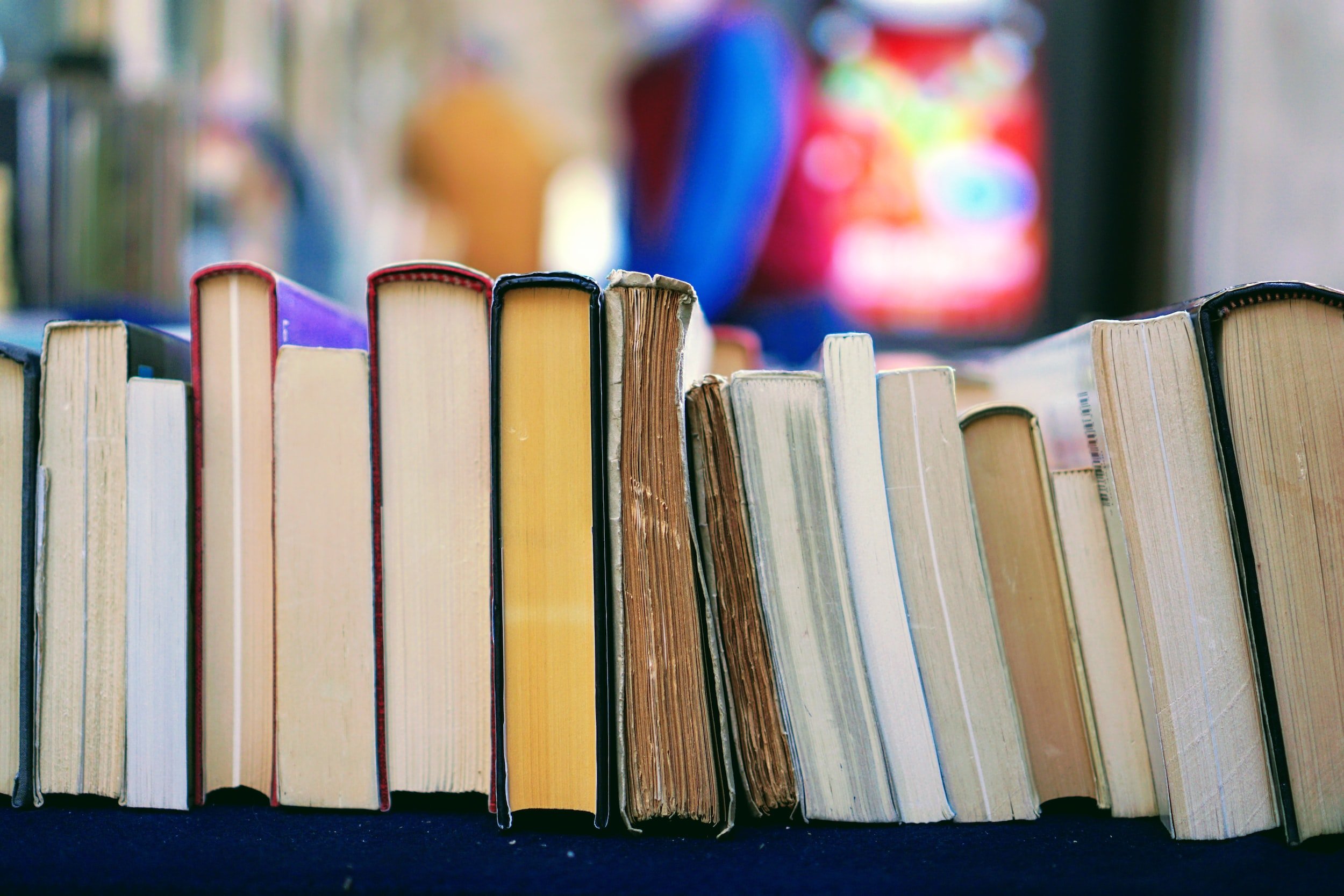
I’ve read or listened to 44 books so far in 2022! Here’s a little drawing I made where I’ve been keeping track of this year’s reading list. (A few blank ones at the end, in case I finish any more.)
Here my top five; these are the ones that have stayed with me, that I draw upon again and again:
I’ve read or listened to 44 books so far in 2022! Here’s a little drawing I made where I’ve been keeping track of this year’s reading list. (A few blank ones at the end, in case I finish any more.)
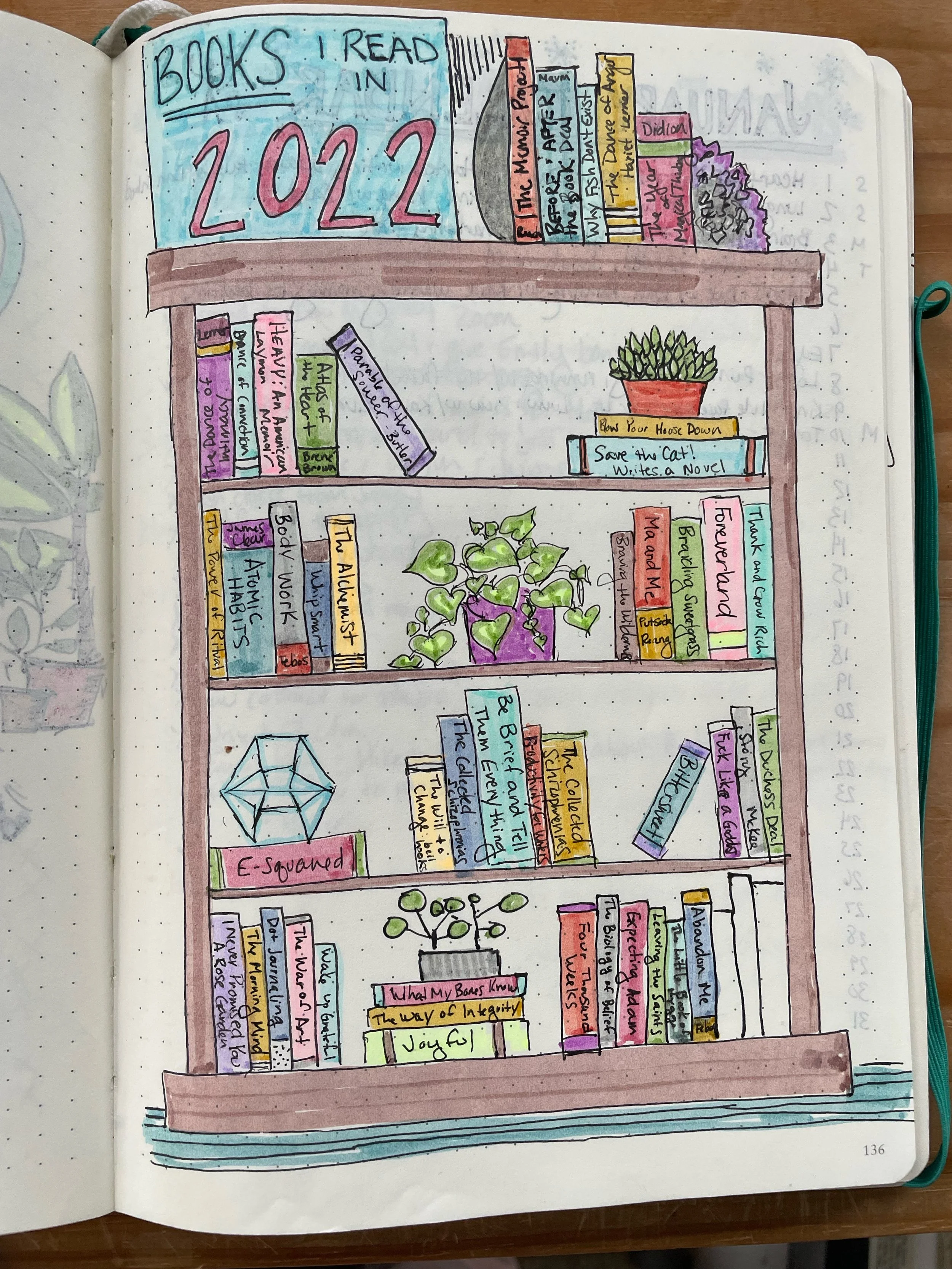
Here are my top five; these are the ones that have stayed with me, that I draw upon again and again:
Braiding Sweetgrass by Robin Wall Kimmerer
The Dance of Anger by Harriett Lerner
Parable of the Sower by Octavia Butler
What My Bones Know by Stephanie Foo
Four Thousand Weeks by Oliver Burkeman
Honorable mentions: Heavy by Kiese Laymon, Bodywork by Melissa Febos, The Way of Integrity by Martha Beck, Bittersweet by Susan Cain, Why Fish Don’t Exist by Lulu Miller, and Story by Robert McKee
Danielle LaSusa Ph.D. is a Philosophical Coach, helping new moms grapple with what it means to make a person. She is the creator of The Meaning of Motherhood course, and co-creator and co-host of Think Hard podcast, which brings fun, accessible, philosophical thinking to the real world. To join her mailing list, subscribe here.
© Copyright Danielle LaSusa PhD, LCC, 2021. All rights reserved.

Gratitude for you all
My year of Gratitude is coming to a close. I started this year recoiling from the word “gratitude.” It made me feel selfish, ashamed, and annoyed. It felt like the people who focused on it were holier-than-thou, naïve, or, at best, insincere. But I chose the word because I felt like if I didn’t learn to become more grateful, I’d continue feeling empty and unworthy, no matter how much success I achieved or things I got.
My year of Gratitude is coming to a close. I started this year recoiling from the word “gratitude.” It made me feel selfish, ashamed, and annoyed. It felt like the people who focused on it were holier-than-thou, naïve, or, at best, insincere. But I chose the word because I felt like if I didn’t learn to become more grateful, I’d continue feeling empty and unworthy, no matter how much success I achieved or things I got.
Over this year, I’ve discovered that gratitude is about attention. To experience gratitude is simply to bring my open attention to the myriad things that are happening each day, (each moment!) that are going well, bringing pleasure, and supporting me—rather than always focusing my attention on problems and out-of-reach solutions.
This does not mean I ignore the problems. It simply means that I put them into right balance. I have a truer sense of the whole.
Surprisingly, doing so has given me more joy, more energy, and more capacity to stay with the difficult things, rather than feeling overwhelmed and rundown by them.
Looking over my many gratitude lists from this year, I find myself most grateful for simple things: sunlight, strawberries, snuggles. When I notice and connect with myself, with others, and with the natural world, I feel nourished. I feel rich.
So, I end 2022 by expressing my gratitude for you all. I am so profoundly lucky to have the life and the work that I do, and I thank you for being a part of it.
Stay tuned in January, where I’ll announce my word for 2023, and I gotta tell ya, this one is very different from gratitude, and it’s a doozy.
What was your word of 2022 (or what word would you give it now) and why? What did you learn this year about it? Share your answer in Mother Den.
Danielle LaSusa Ph.D. is a Philosophical Coach, helping new moms grapple with what it means to make a person. She is the creator of The Meaning of Motherhood course, and co-creator and co-host of Think Hard podcast, which brings fun, accessible, philosophical thinking to the real world. To join her mailing list, subscribe here.
© Copyright Danielle LaSusa PhD, LCC, 2021. All rights reserved.

Take 15 Seconds to Feel Better
I was starting to get worried that the end of the year was approaching, and I hadn’t shifted all that much on this year’s theme of “Gratitude.” Thanksgiving would fall flat again this year. Sure, I’d thought about gratitude as a concept a lot, felt little glimmers here and there, but ultimately, I still felt like my life was full of unending to-do lists and piles of laundry.
I was starting to get worried that the end of the year was approaching, and I hadn’t shifted all that much on this year’s theme of “Gratitude.” Thanksgiving would fall flat again this year. Sure, I’d thought about gratitude as a concept a lot, felt little glimmers here and there, but ultimately, I still felt like my life was full of unending to-do lists and piles of laundry.
But recently, I started reading this book that’s taken my gratitude practice to a new level. It’s called Wake Up Grateful. The author Kristi Nelson repeatedly reminds us that, in any moment, there are countless things for which to be grateful: You are alive. Your lungs work. Your heart is beating. You can see, hear, smell. None of these things are guaranteed, and they will not be true forever.
Had it not been for all my other attempts to cultivate gratitude this year, I might have rolled my eyes at such a claim and said, “That’s nice, but I have things to do.” But, those little glimmers from earlier in the year made me want to try this practice.
So, for the past couple weeks, at any random moment of the day, I take about 15 seconds to list as many things as I can think of to be grateful for that are happening right now:
I’m in a warm building. I’m healthy. I have a loving partner and child. My parents are still alive. There is a tree with bright red leaves outside the window. I have a kitchen full of snacks. There’s a mug of hot tea within reach. I can get up and move around, without pain, whenever I want to. I can write these very words, and you, miles away, can read them.
Without fail, by the end of this list, my chest swells with a tender feeling that life really is remarkable. And the more I do this practice, the more I realize that, yes, in fact, there is always a much longer list, (even if I don’t always notice it).
Knowing that the list of blessings is always long feels a bit like a safety blanket, a soft cushion I can always rest on when I need to, and it’s given me a more pervasive sense of wellbeing.
Turns out, maybe all that work I’ve done all year is paying off.
So, I offer this practice to you, and I invite you to share. We’re just over halfway through our 100 Days of Magic in the Mother Den community, in which we are listing 3 things for which we’re grateful everyday until the end of 2022. Come join us! It’s free!
Danielle LaSusa Ph.D. is a Philosophical Coach, helping new moms grapple with what it means to make a person. She is the creator of The Meaning of Motherhood course, and co-creator and co-host of Think Hard podcast, which brings fun, accessible, philosophical thinking to the real world. To join her mailing list, subscribe here.
© Copyright Danielle LaSusa PhD, LCC, 2021. All rights reserved.
What the Dalai Lama Thinks You're Missing
One thing I’ve been wrestling with in working with my theme of Gratitude this year is what you might call the “Pollyanna factor”: gratitude is a syrupy sweet, simple-minded or even damaging version of toxic positivity. “Just smile and look on the bright side,” (she says through gritted teeth).
But, of course, the world has many ills that need real attention. People are suffering, and it feels like the engaged and empathic thing to do is to suffer greatly along with them, not list our blessings.
One thing I’ve been wrestling with in working with my theme of Gratitude this year is what you might call the “Pollyanna factor”: gratitude is a syrupy sweet, simple-minded or even damaging version of toxic positivity. “Just smile and look on the bright side,” (she says through gritted teeth).
But, of course, the world has many ills that need real attention. People are suffering, and it feels like the engaged and empathic thing to do is to suffer greatly along with them, not list our blessings.
In his book, The Art of Happiness in a Troubled World, the Dalai Lama says that, for most of us, the bad things about the world have an out-sized place in our perception of reality. Human brains have evolved to have a negativity bias. (Being on alert for the mountain lion and remembering the horrible incident of the poisonous berries have helped us survive.) But, it also, unfortunately, narrows and limits our scope of reality. Yes, there are heinous crimes reported on the news, but the reason they make the news at all is that the vast majority of people are not doing them. The vast majority of people are caring for their loved ones and saying pleasant hellos to their neighbors.
To ignore the good of life is simply to have a distorted view of the world. It is like the allegory of the blind man who touches an elephant’s wispy tail and concludes that an elephant is like a broom. When you only focus on one part, you end up with a false image of the whole.
And you’re wrong.
To expand your scope and get a fuller, truer vision of the rest of reality, including all those wonderful bits of joy like red autumn leaves, indoor plumbing, snuggles in bed, and community members caring for one another, join 100 Days of Magic for free in the Mother Den community, and list 3 pieces of magic from everyday life from now until the end of 2022.
Danielle LaSusa Ph.D. is a Philosophical Coach, helping new moms grapple with what it means to make a person. She is the creator of The Meaning of Motherhood course, and co-creator and co-host of Think Hard podcast, which brings fun, accessible, philosophical thinking to the real world. To join her mailing list, subscribe here.
© Copyright Danielle LaSusa PhD, LCC, 2021. All rights reserved.
100 Days of Magic
In the month before my 40th birthday, I ran a little experiment to see if a daily gratitude practice would help me get out of a funk. Maybe it was the 2-Year Pandemic blues, but this past March, a heaviness settled on me and lingered there. With the weight of war, mass shootings, Supreme Court rulings, and record high heat, I felt lonely and depressed.
In the month before my 40th birthday, I ran a little experiment to see if a daily gratitude practice would help me get out of a funk. Maybe it was the 2-Year Pandemic blues, but this past March, a heaviness settled on me and lingered there. With the weight of war, mass shootings, Supreme Court rulings, and record high heat, I felt lonely and depressed.
So, inspired by the “woo”-rific book Thank and Grow Rich by Pamela Grout, (with her nod to Napoleon Hill of Think and Grow Rich ), I decided to try texting a short list of 3 blessings to a group of friends every day for 30 days. I sent out a call, and about a dozen of my friends were game. Within the first couple days, several of them started responding with their own list of gratitudes.
We celebrated daily blessings big and small: Oregon strawberries, favorite authors and activists, hummingbirds, morning coffee, new homes, successfully getting grumpy six-year-olds out of the house and watching them finally smile.
Receiving those texts started to become the best thing about my day. They brought a little boost of good news to help balance out all the bad. And as the weeks passed, I noticed a deeper shift: writing and receiving these lists primed me to look for loveliness, delight, and joy. My lists were full of sensory pleasures and natural beauty, little bits of magic all around me. By the time I sent my last text, the day before my birthday, I was feeling pretty damn lucky.
I loved this experiment so much, that I’m running it again, and this time, I want you to be part of it! It’s going to be even bigger this time; it’ll take us all the way to the end of 2022! Join me for:
100 Days of Magic
Starting on Friday, September 23rd, I will post a daily list of 3 delights to a private group in my online community Mother Den every day for 100 days. I invite you to join and post lists of your own!
You are welcome to join me in posting everyday, or just occassionally as your mood, schedule, and energy allows. (If you haven’t downloaded it yet, I recommend getting the Mighty Networks mobile app, so you can dash off a quick list on the go.) Or, you can just join the group to read all the lovely things people are celebrating—you don’t need to post at all!
Imagine what life might feel like if you receive and add to this little daily dose of good vibes and delight. I suspect that we’ll go into 2023 feeling pretty magical.
Oh, and it’s totally free.
Click here for instant access to 100 Days of Magic in the Mother Den community.
Danielle LaSusa Ph.D. is a Philosophical Coach, helping new moms grapple with what it means to make a person. She is the creator of The Meaning of Motherhood course, and co-creator and co-host of Think Hard podcast, which brings fun, accessible, philosophical thinking to the real world. To join her mailing list, subscribe here.
© Copyright Danielle LaSusa PhD, LCC, 2021. All rights reserved.
Damn Lucky
You never know how close you are to something terrible happening. That was the feeling my client struggled with for a long time after enduring life-threatening experiences in her childhood. And, while she’d worked through a lot of her anger and anxiety, she was still struggling with accessing joy.
You never know how close you are to something terrible happening. That was the feeling my client struggled with for a long time after enduring life-threatening experiences in her childhood. And, while she’d worked through a lot of her anger and anxiety, she was still struggling with accessing joy.
“I don’t feel particularly happy or grateful for my life,” she said. Why should she feel grateful, she wondered, for this world in which she survived by dumb accident and tragedy could strike at any moment? For her, the universe is chaotic and uncaring, (evoking philosopher Thomas Hobbes’ claim that life is “nasty, brutish, and short”).
During our session, I asked what we might uncover if we lean even further into life’s randomness but shifted the tone from despair to wonder. “It is by pure chance that our world exists at all,” I said. “Molecules bumping into each other and then, boom, here it is, we’ve got bumble bees. Plants turn light into food! That’s crazy!" I marveled. My client chuckled and agreed, pointing out that we were people talking to each other on laptops from halfway across the world.
“Yes! None of this could be, and yet, by some mystery, it is.” I said. I suggested that rather than forcing ourselves to feel “gratitude,” per se, perhaps we just allow ourselves to sit in wonder at this incredible accident and think: “The fact that I am able to witness this at all is just damn lucky.”
“Damn lucky. I like that,” my client said with a smile. “I think it’s easier to feel damn lucky than grateful.”
She reflected how feeling damn lucky is still joyful and acknowledges the good things in life, but without implying a benevolent source or a deserving and worthy recipient.
So, I offer this practice to you. What do you feel damn lucky to witness? Share your answer in the Mother Den community.
Danielle LaSusa Ph.D. is a Philosophical Coach, helping new moms grapple with what it means to make a person. She is the creator of The Meaning of Motherhood course, and co-creator and co-host of Think Hard podcast, which brings fun, accessible, philosophical thinking to the real world. To join her mailing list, subscribe here.
© Copyright Danielle LaSusa PhD, LCC, 2021. All rights reserved.
A whole new meaning of Mother Earth
Spring has come to Portland, (despite yesterday’s weird spring snow). As the blooming flowers and warm weather returns, I can’t help but feel a twinge of fear at the coming summer. What used to be anticipation of sprinklers, popsicles, and backyard barbecues is now bracing for wildfire smoke, heat domes, and gunshots ringing through the city nights.
Some days, it seems absurd to continue to turn toward my 2022 theme of gratitude.
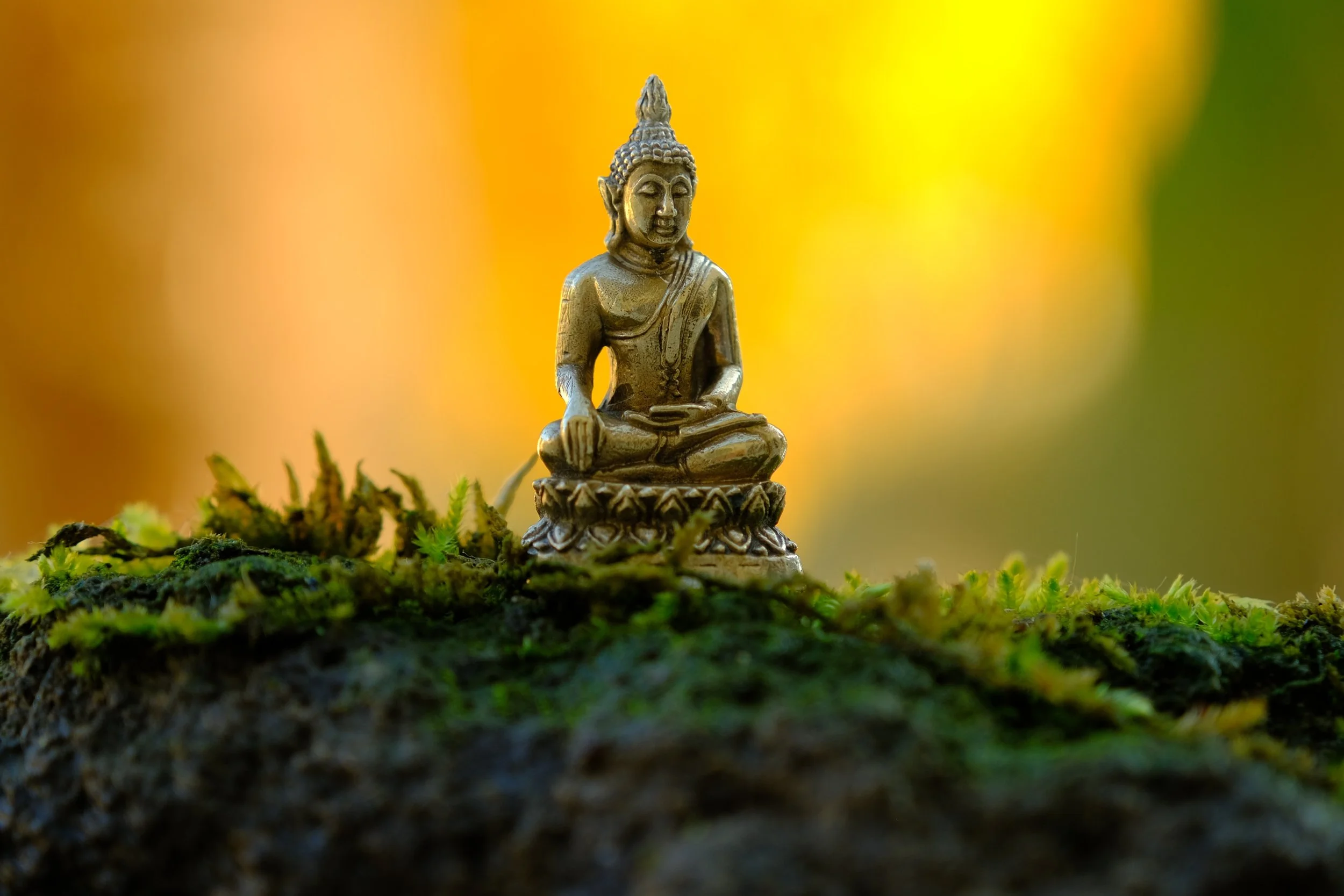
The earth itself played a key role in the Buddha’s enlightenment, or at least that’s how the story goes.* You see, before he became “the Buddha,” Siddhartha was all alone. Originally a prince, he’d left his family, wife, and child to seek spiritual liberation as a forest-dwelling Hindu renunciate. He’d trained for years with the best spiritual gurus of his time, but they had not lead him to ultimate freedom from suffering, and so he’d abandoned them and continued on his own.
Siddhartha was emaciated, dirty, and near starvation after living in extreme asceticism for years. At the end of his rope, he sat down under a tree and vowed that he would not move until he reached full enlightenment.
That’s when Mara, the god of craving, delusion, and death, showed up. After several failed attempts to persuade the would-be Buddha to give up, Mara finally said, “Even if you do reach enlightenment, who is going to witness you?” Mara knew that Siddhartha had no teachers, no friends, no caretakers; his mother had died when he was a baby. It was a deep cut.
But, in his wisdom, Siddhartha reached down and touched the ground, saying, “This earth will witness me.”
That was the moment of his enlightenment.
Whenever I find myself spiraling, feeling lost, unlovable, and alone, I try to say to myself, “This earth is your home. You belong here.” I think of what Buddhist teacher and psychotherapist Tara Brach calls the “gentle hug of gravity” pulling me close to the planet. I think of the story of the Buddha’s enlightenment, and I feel held.
This practice of leaning in to Mother Earth is forging a new kind of relationship to the natural world for me. I feel more and more connected to the birds, the forests, the water, the fungi. I also feel more and more grief for what our society’s way of life has done to our collective home, but also, a greater willingness to look, to see, to do something to help restore this sacred bond between people and planet.
May we all know, deep in our bones, that this earth witnesses us.
In what ways does the earth witness you? Share your answer in the Mother Den community.
* See Mark Epstein’s wonderful book The Trauma of Everyday Life
Danielle LaSusa Ph.D. is a Philosophical Coach, helping new moms grapple with what it means to make a person. She is the creator of The Meaning of Motherhood course, and co-creator and co-host of Think Hard podcast, which brings fun, accessible, philosophical thinking to the real world. To join her mailing list, subscribe here.
© Copyright Danielle LaSusa PhD, LCC, 2021. All rights reserved.
Danielle LaSusa, Practical Philosopher

I'm Danielle LaSusa PhD, Philosophical Coach and Consultant. I help individuals and organizations think clearly, choose wisely, and live purposefully. I specialize in serving moms.
Learn More →
Follow Me
Follow me on social media to get up-to-the-minute philosophical wisdom.