What Does It Mean to Make a Person?
Creating a human may be the most profound thing we can ever do, and yet, this strange and philosophical question is largely absent in the cultural conversation around motherhood.
“We made a person.” Lucy stared at me incredulously, her blond hair a-wisp, her three-day-old baby nursing at her breast. We perched on her couch, as we might have done, sipping tea, chatting as old friends do—as we had done countless times, before she and her husband decided to…make a person.
Neither of us could quite understand it. What does it mean to make a person? And what did it mean now that Lucy was a mother?
The whole situation felt weird, just weird, as if she just gotten news that a wealthy relative had died, leaving her an elaborate estate on the far side of the moon. What could it possibly mean?
Creating a human may be the most profound thing we can ever do, and yet, this strange and philosophical question is largely absent in the cultural conversation around motherhood. Instead, we have endless debates about co-sleeping, baby-wearing, and breastfeeding, but the bare and haunting truth of a mother’s relationship to new human consciousness is lost beneath the noise of the world’s insistence that moms “get it right.”
So, I’m teaching a course called The Meaning of Motherhood at the Portland Underground Graduate School, which gives the mind-bending experience of creating a person the open, curious, honest reflection that it deserves.
This is the course for moms who aren’t sure what they think about babies. Here’s what to expect:
Week 1: The Birth of the Mother
In week 1, we’ll discuss the identity of motherhood and what it means to develop this new identity. What is lost, what is gained, and what does it mean to be a mother?
Week 2: A New Consciousness
In week 2, we’ll explore how this creation of life can raise bring up a deep sense of vulnerability, anxiety, and confusion about the meaning of mortality and human existence. Yeah, that’s right. We’re going to talk about death.
Week 3: Good Mom/Bad Mom
In week 3, we’ll explore, and challenge, some of the personal and cultural messages that we carry around that inform our judgments about what a good or bad mom is, and how these messages can impact the self-image and well-being of mothers.
Week 4: The Village
In week 4, we’ll explore the institutional and social supports, or lack thereof, in the form of family/maternity leave, child care, and norms around visitation, care, and community of motherhood. We’ll discuss ways that we may better support mothers, both at interpersonal and societal levels.
You’ll be able to commune with other moms, and grapple together with this strange new reality.
Thursdays, January 10, 17, 24, and 31st
7-9 pm in SE Portland, OR.
Can’t wait until class to jump in? Check out part of the homework for Week 1: Watch Alexandra Sacks’ TED talk, in which she argues to reclaim the term “matresence,” the period of hormonal, physical, and emotional changes that characterize the transition to motherhood as a real thing, like adolescence.
The course fee is on a sliding scale, starting at $99, and you can sign up now for even less.
Register with the code WE<3TEACHERS to get 10% off!
Register with a friend and use code YOUVEGOTAFRIEND to get 25% off!
If you want the time and space to wrap your head around what it means to make a person, come connect, reflect, and join us.

Want to learn more about my work as a Philosophical Coach for moms? Check out my page for moms and contact me to learn more.

Danielle LaSusa Ph.D. is a Philosophical Coach and Consultant. She helps new moms grapple with what it means to make a person. She is the co-creater and co-host of Think Hard podcast, which brings fun, accessible, philosophical thinking to the real world.
© Copyright Danielle LaSusa PhD, LCC, 2018. All rights reserved.
What is Philosophical Coaching?
Would you trade your therapist for a philosophical coach? More and more people are discovering the benefits of conversations with philosophers to help them figure out their lives. It’s called Philosophical Coaching or Philosophical Counseling, and there are lots of good reasons that philosophy is an excellent foundation for counseling.
Would you trade your therapist for a Philosophical Coach? More and more people are discovering the benefits of conversations with philosophers to help them figure out their lives. It’s called Philosophical Coaching or Philosophical Counseling, and there are lots of good reasons that philosophy is an excellent foundation for counseling.
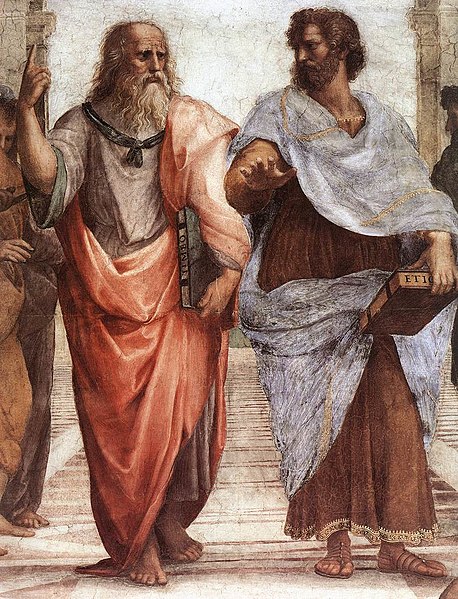
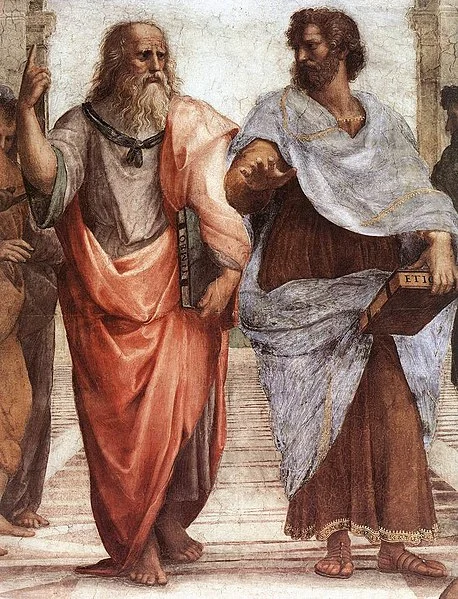
These two guys are thought to be Plato and Aristotle, from the Renaissance painting “School of Athens,” by Raphael.
Before psychology was its own discipline, and before psychotherapy was invented at the turn of the 20th century, if you wanted outside perspective in figuring out your life, you sought out a philosopher.
Philosophers are trained to think deeply at critically, and to engage in Socratic dialogue to help unpack conceptual problems. In other words, we’re really good at asking questions.
Additionally, philosophy has about 3000 years of human wisdom to draw from to explore issues in identity, truth, ethics, politics, and meaning. Who am I? How do I know? What should I do? What is right or just? What is the meaning of life? These are the questions that philosophers have been exploring for centuries.

And as someone who has a Ph.D. in philosophy, I’ve read an awful lot of what they have to say, and I’ve thought a lot about the strengths and weakness of various answers to these questions.
So, in episode #36 of my podcast Think Hard, my co-host José Muñiz and I talk about what Philosophical Coaching is and why it’s valuable. It’s called #36: What is Philosophical Coaching? and you can listen below:
Want to know more about Philosophical Coaching? Why not hear it from those who have benefitted. Here are some things my clients have had to say about Philosophical Coaching:
“It’s having your own personal guru whose knowledge isn’t pigeonholed to one set methodology or theory - the best of all the guru knowledge! Danielle was compassionately honest and helped me switch my perspective while bringing in great tools from varied philosophical perspectives. In just two sessions, my attitude around my work atmosphere has completely shifted!
”
Here’s another:
“I didn’t quite know what to expect, and what I discovered is that I got out of it something I’d always hoped to — but hadn’t — gotten out of traditional talk therapy: someone able to take off the kid gloves and completely follow along as I outlined the shifting existential dilemmas that I often grapple with in my own head, recognize them as commonly occurring problems previously grappled with by many others, and offer angles and insights I had yet to get to on my own.”
And yet another:
“Having spent twenty years in traditional, analytical therapy with psychologist, I was interested in a different perspective. Danielle provided an open atmosphere for discussion about concerns and goals in my life. We didn’t stay hung up in the past, as often happens in therapy, but also didn’t disregard it. It is a good balance between reflection and evolution. I highly recommend!”
Read more testimonials here.
If you think Philosophical Coaching might be right for you, I invite you to contact me for a free 90-minute discovery session, or read more about Philosophical Coaching, including some Frequently Asked Questions, on my website.
You can also learn more about Think Hard, and give us feedback at our website thinkhardpodcast.com, or find us on Apple Podcasts or Stitcher. Follow us on Twitter, follow our Facebook page, and join our Facebook Community Group to connect with José Muñiz, Danielle LaSusa, and fans of the show.

Danielle LaSusa Ph.D. is a Philosophical Coach and Consultant. She helps new moms grapple with what it means to make a person. She is the co-creater and co-host of Think Hard podcast, which brings fun, accessible, philosophical thinking to the real world.
© Copyright Danielle LaSusa PhD, LCC, 2018. All rights reserved.
Courage to Think. Courage to Love. Courage to Hope.
I've been thinking a lot about how much courage it takes to live with purpose. We must look inside ourselves, see our weaknesses, our faults, our failures, but we must also see our strengths, our talents, our dreams. We must have the courage to face ourselves.
Courage to Think. Courage to Love. Courage to Hope.
In the 2008 documentary, The Examined Life, philosopher Cornel West sits in the back of a cab on the fast streets of New York City, riffing, like a jazz player, about the virtues and depths of philosophy. His words are lyrical, prophetic, wise.

West considers the courage and discipline it takes to reflect philosophically, to question your life, your mind, your values. He says:
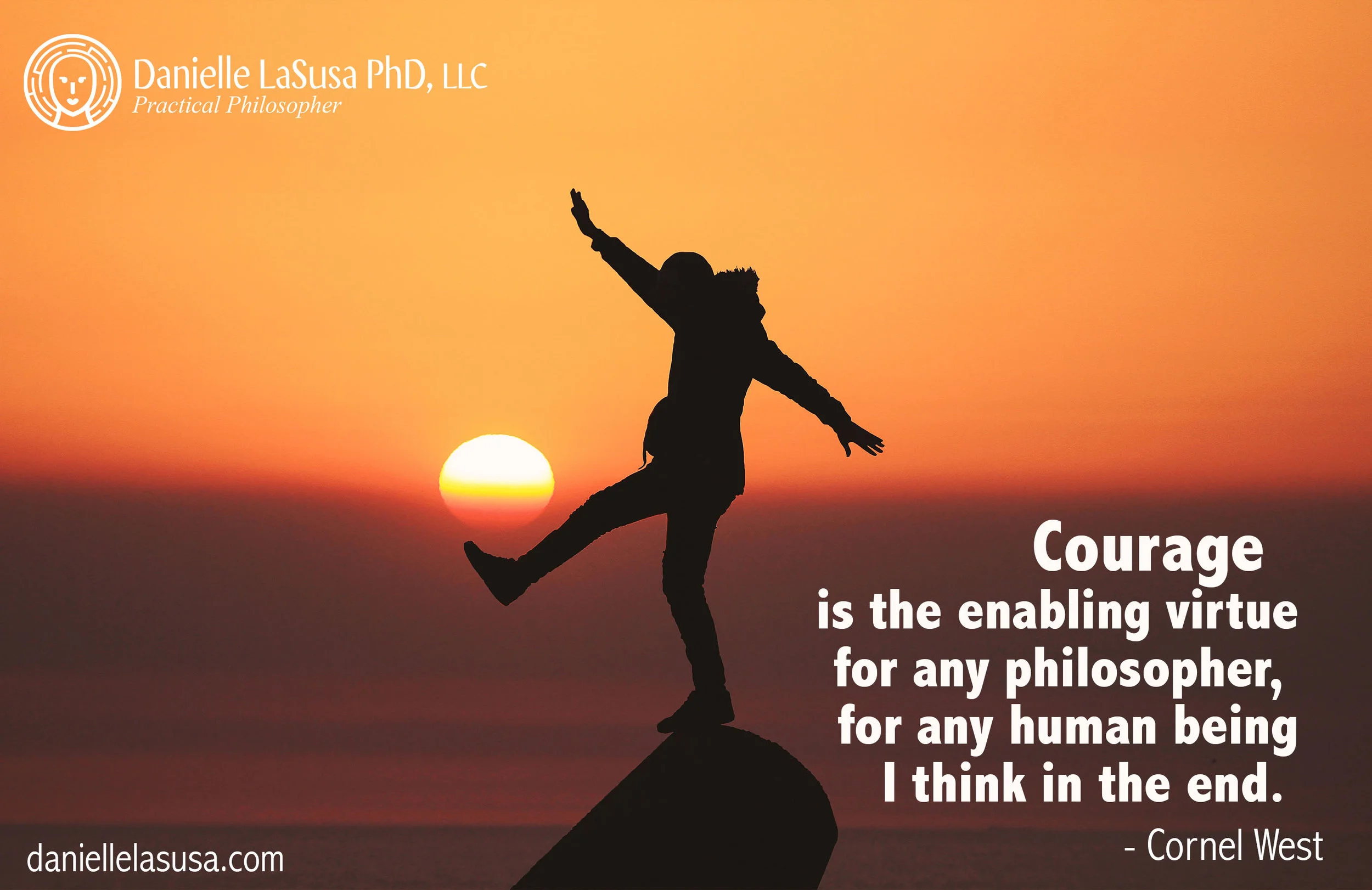
A philosopher is a lover of wisdom. It takes tremendous discipline, it takes tremendous courage to think for yourself, to examine yourself. The Socratic imperative of examining yourself requires courage. William Butler Yeats used to say that it takes more courage to examine the dark corners of your own soul than it does for a soldier to fight on the battlefield. Courage to think critically. Courage is the enabling virtue for any philosopher, for any human being I think in the end. Courage to think, courage to love, courage to hope.
I've been thinking a lot about how much courage it takes to live with purpose. We must look inside ourselves, see our weaknesses, our faults, our failures, but we must also see our strengths, our talents, our dreams.
We must have the courage to acknowledge that we want something, knowing all the while we may never get it, and the courage to go after it, knowing that we may fall short.
We must have the courage to say what we believe, knowing that we may be criticized, chastised, rejected, and the courage to recognize when we were wrong.
We must have the courage to take the one difficult step that will move us forward, rather than take all the easy steps that will keep us in place.
We must have the courage to face ourselves.
We need not do this work alone. If you would like a little boost of courage, I invite you to connect with me and let me be your guide. We'll develop your courage to look deeply at your inner life, so that you can live more courageously. Contact me by email or phone, join my mailing list, and connect with me on Facebook, Twitter, LinkedIn, and Medium.

Danielle LaSusa Ph.D. is a Philosophical Coach and Consultant, helping individuals and organizations think clearly, choose wisely, and live purposefully. She is the co-creater and co-host of Think Hard podcast, which brings fun, accessible, philosophical thinking to the real world.

This Workshop Helps You Read the News without Seething Rage
The state of the world these days is enough to make you want to scream curses at the sky, throw a molotov cocktail through some institutional windows, and then snuggle up to a bottle of tequila for the remainder of the evening.
The state of the world these days is enough to make you want to scream curses at the sky, throw a molotov cocktail through an institutional window, and then snuggle up to a bottle of tequila for the remainder of the evening.
Even if you don't follow through on these dark fantasies, walking around with them in your angry little heart doesn't go very far toward helping the situation. Frankly, it only makes you, and those around you, feel miserable.
Somewhere in your body, in the back corners of your mind, you know there has to be a better way—a way that condemns injustice and holds space for suffering, without being swallowed up by it. A way that acknowledges the harm that other people do, without hoping that they drown in their morning oatmeal. A way that restores your faith in humanity.
One of the world's most well-known political activists, the Dalai Lama, shows us a way to continue to work for justice with an attitude of connection, curiosity, and compassion, rather than rage and revenge.
Unpack and understand these Buddhist teachings about social action with me, a philosophical coach and professor of philosophy, and explore how to use them in your own life. Uncover your fundamental assumptions about human relationships, and connect with others in an intimate group setting at my workshop "Buddhism in Action," organized by Curious Soul Philosophy.
This workshop is part philosophy seminar, part group coaching session. In Part One: The Theory, we'll discuss the ideas and concepts, ask clarifying and challenging questions, and try to understand the teachings of openness, trust, and compassion.
In Part 2: The Lab, we'll reflect on our own lives, share where we feel resistance, and support each other as we experiment with making positive changes.
We can learn to engage with the world with with less anger and more trust and compassion. These small changes not only help ourselves, but can go a long way toward making positive changes in the world. I hope you join me in exploring how.

Danielle LaSusa Ph.D. is a Philosophical Coach and Consultant, helping individuals and organizations think clearly, choose wisely, and live purposefully. She is the co-creater and co-host of Think Hard podcast, which brings fun, accessible, philosophical thinking to the real world.

What To Do When Your Worldview Falls Apart
What do you do when everything you believe about the world crumbles to pieces around you? How do you rebuild a sense of hope, meaning, and truth? As a philosophy professor and coach, I've thought about these questions a lot, and I’ve learned some things. I gave a TEDx talk at TEDxPCC called, "What to do when you're worldview falls apart." Take a look.
What do you do when a fundamental belief about the world crumbles to pieces around you? How do you rebuild a sense of hope, meaning, and truth?
As a philosophy professor and coach, I've thought about these questions a lot, and I've learned some things. I gave a TEDx talk at TEDxPCC called, "What to do when you're worldview falls apart." Take a look.

What's been your big crash? If you have also struggled with a loss of faith in God, you may also be interested in my talk on how to have hope in a Godless world.
If your worldview seems to be cracking around at the edges and you feel as though you need help through the process, I invite you to connect with me for a free 30-minute Philosophical Coaching consultation. (Learn more about Philosophical Coaching here.) You can also join my mailing list, and connect with me on Facebook, Twitter, LinkedIn, and Medium. Let's rebuild.

Danielle LaSusa Ph.D. is a Philosophical Coach and Consultant, helping individuals and organizations think clearly, choose wisely, and live purposefully. She is the co-creater and co-host of Think Hard podcast, which brings fun, accessible, philosophical thinking to the real world.

30 Delightful Conversations about Philosophy in the Real World
Philosophical questions about what is good, beautiful, right, and valuable are questions that all of us ask everyday. These 30 accessible, funny, thoughtful conversations cover everything from whether it is ethical to have children to why we should lament the decline of social dancing.
Philosophy ain't just for white-haired professors anymore.
Questions about what is good, beautiful, right, and valuable are questions that all of us ask everyday. Should I be "civil" to someone with intolerant beliefs and actions? How do we know what is true in the era of fake news? Is 10 Things I Hate About You the best teen movie ever made? Check out these 30 fun, accessible conversations about philosophy and everyday life.

All 30 conversations appear on Think Hard, the podcast where two trained philosophers think hard about the real world. My co-host José Muñiz and I created this podcast because we love philosophy and we believe that it lives in the everyday world.
We bring our philosophical perspectives, our curiosity, and of course, our good humor and witty banter to everything from political protests, to self-help books, to the merits of snobbery.
We've just released our 30th episode, so I'm taking this moment to give you a brief rundown of all of our conversations thus far.
If you don't know where to begin, episodes #9, #14, #25, and #26 are some of my favorites, full of laughter, honesty, and two people trying to figure out the world.
- #1: I had a crumby trip because I'm a crumby person: Why do we desire to find authenticity when we travel?
- #2 Stop Traffic...and You Die: What purpose do protests serve in the public arena?
- #3: T-Shirt Feminism: Has the mainstreaming of feminism has sold it out to capitalist interests?
- #4: Giving with Reason: Are there rational reasons for giving to those less fortunate?
- #5: Lottery Players Lack Imagination: What happens in our mind when we think about whether or not to take a risk?
- #6: White Girl Sings the Blues: Where is the line between cultural exchange and cultural appropriation?
- #7: Death Rattles of Dance: Is social dancing on the decline? And if so, what do we lose if it dies?
- #8: Where is the Pain?: Can meditation change the brain so much that we can cease to feel pain?
- #9: In Defense of Snobs: Are snobs just obnoxious, self-righteous jerks, or do they contribute something of value to society?
- #10: Help Yourself: Can philosophy make for better self-help?
- #11: Tolerating the Nazi Next Door: Why should we value tolerance, and how do we treat those who are intolerant?
- #12: Is Belief in God Morally Wrong?: Given all of the warfare and destruction in the name of God, is it morally wrong to hold this belief without sufficient evidence?
- #13: Emotional Work for White People: Why is it so hard for white people to talk about racism?
- #14: I’m Not a Masturbation Couch: Does sexual desire always or necessarily involve the dehumanizing objectification of others?
- #15: All News is Fake News: With new technologies that have the ability to literally change what we see and hear through audio and video manipulation, how do we know that what we see or hear is true?
- #16: Teen Movies will Save the World: Are The Breakfast Club, Ferris Bueller’s Day Off, and 10 Things I Hate About You, just silly teen movies or important cultural artifacts that show us how to view the world with complexity, nuance, and depth?
- #17: From Happy Cow to Hopeful Child: Should we be teaching hopeful thinking as an integral part of teaching critical thinking?
- #18: You, Me, and the Mighty Mighty Bosstones: What have we learned and loved in creating Think Hard?
- #19: Feminist Friendship: Guest Cori Wong asks: How we can do better in bridging the gaps between white women and women of color in the “feminist movement"?
- #20: When is Enough…Enough?: How do I know when to accept myself as I am and when to strive to improve myself?
- #21: Borrowing Worry: Can all anxiety be understood as one or more of three basic fears, all of which are fundamental features of the human condition?
- #22: We Got Options: What about polyamory provides opportunity for personal growth and development?
- #23: Hope in a Godless World: For those who don’t believe in a benevolent, higher power, where do we look for hope and guidance when things are looking grim?
- #24: The Real Thing: Why do we want to see the real, original piece of art?
- #25: On Racist Jokes (Funny Ones): Is it ok to laugh at racist jokes? Does it matter who is telling the joke?
- #26: My Baby, My Moral Mistake: Given over-population, the current environmental crisis, and the potential for a future full of hardship and suffering, is it ethical to have kids?
- #27: Of Friends and Flatulence: Why is it so hard to make friends in adulthood?
- #28: Our Patron Saint: Guest Jack Russell Weinstein considers: What do philosophers have to offer the public?
- #29: The “I” in Us: How do we, as a society, tackle issues like climate change or global poverty when we see ourselves as fractured groups, each with its own concerns?
- #30: Playing Chess with Yourself: Who are you, really, and how do you know if you’re being yourself?
What's your favorite episode? What topics have we not yet covered that you think we should? Post in the comments and let me know. And share this list with a friend, with your own recommendation for where they should begin!
Learn more about Think Hard, and give us feedback at our website thinkhardpodcast.com, or find us on Apple Podcasts or Stitcher. Follow us on Twitter, follow our Facebook page, and join our Facebook Community Group to connect with José Muñiz, Danielle LaSusa, and fans of the show.

'Think Hard' Episode #29: The "I" in Us
How do we, as a society, take broad political action on issues like climate change or global poverty when we see ourselves as fractured groups, each with its own concerns?
In episode #29: The "I" in Us of my podcast Think Hard, I suggest that identity politics—organizing and motivating political action through features of your identity such as race, gender, class, nationality, religion, etc.—is insufficient for the type of collective action needed to solve some important global problems. My co-host José believes that all political action must necessarily begin with the interests, needs, and perspectives of identity. What do you think?
How do we, as a society, take broad political action on issues like climate change or global poverty when we see ourselves as fractured groups, each with its own concerns?
In episode #29: The "I" in Us of my podcast Think Hard, I suggest that identity politics—organizing and motivating political action through features of your identity such as race, gender, class, nationality, religion, etc.—is insufficient for the type of collective action needed to solve some important global problems. My co-host José believes that all political action must necessarily begin with the interests, needs, and perspectives of identity. What do you think? Let me know in the comments.

Learn more about Think Hard, and listen to all our episodes at our website thinkhardpodcast.com, or find us on Apple Podcasts or Stitcher. Follow us on Twitter, follow our Facebook page, and join our Facebook Community Group to connect with José Muñiz, Danielle LaSusa, and fans of the show.

'Think Hard' Episode #28: Our Patron Saint
What do philosophers have to offer the public?
In the latest episode of my podcast Think Hard #28: Our Patron Saint welcome special guest Dr. Jack Russell Weinstein, Director of the Institute for Philosophy in Public Life at the University of North Dakota and host of the public radio show and podcast Why? Philosophical Discussions About Everyday Life, to talk about public philosophy.
How is talking to a public audience about philosophy different than speaking to those in traditional academic settings? What do philosophers have to offer the public?
In the latest episode of my podcast Think Hard #28: Our Patron Saint welcome special guest Dr. Jack Russell Weinstein, Director of the Institute for Philosophy in Public Life at the University of North Dakota and host of the public radio show and podcast Why? Philosophical Discussions About Everyday Life, to talk about public philosophy.
Learn more about Think Hard, and listen to all our episodes at our website thinkhardpodcast.com, or find us on Apple Podcasts or Stitcher. Follow us on Twitter, follow our Facebook page, and join our Facebook Community Group to connect with José Muñiz, Danielle LaSusa, and fans of the show.
Practical Philosophy for Veterinary Medicine
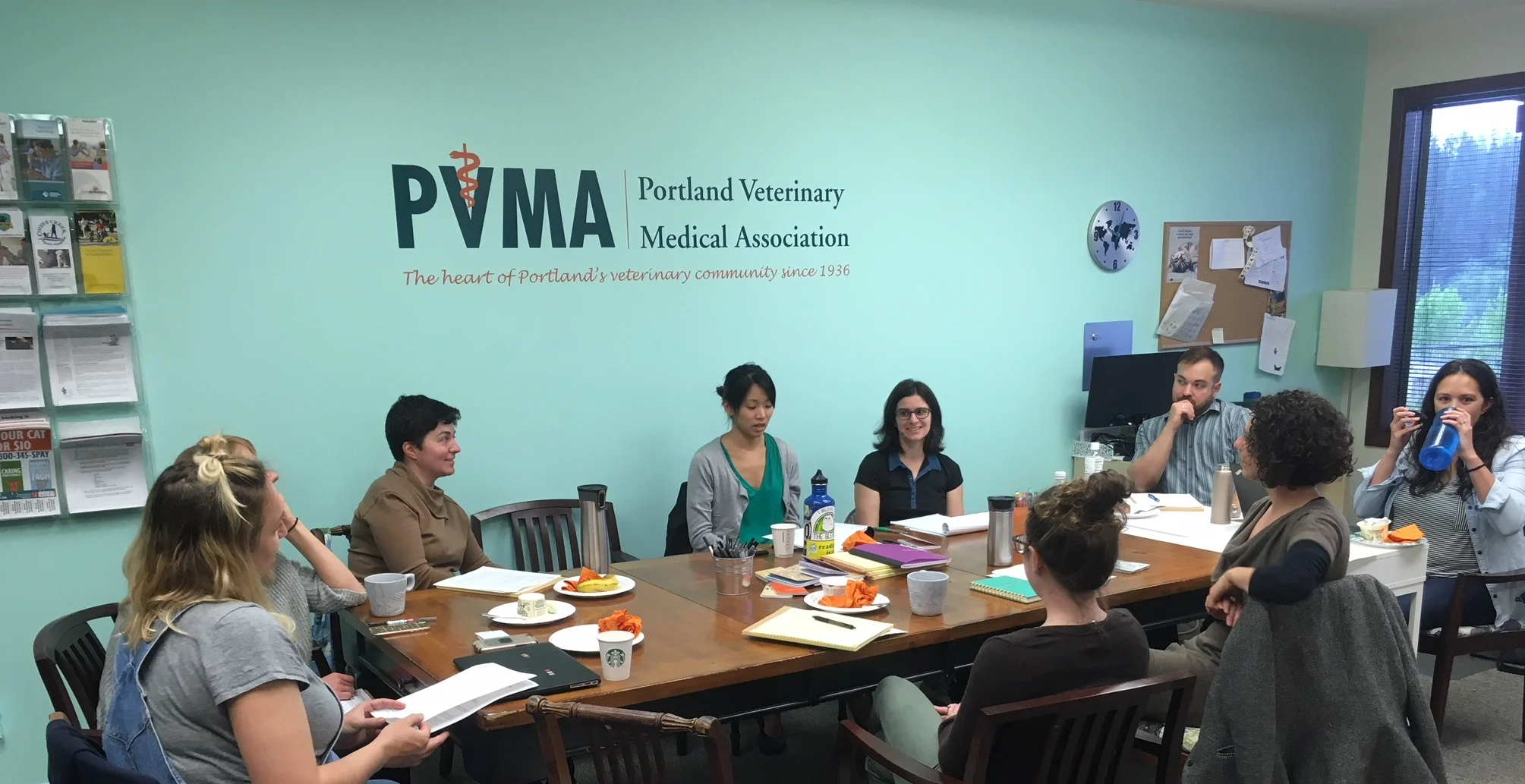
A philosophical perspective can help with almost any professional work, including veterinary medicine. Last week, I spoke with a group of professional veterinarians about how philosophical skills and thinking can help make their work more efficient, productive, purposeful, and fulfilling. Here are some of the tips and perspectives I gave them.
A philosophical perspective can help with almost any professional work, including veterinary medicine. Last week, I spoke with professional veterinarians at the Early Career Professional and Personal Development Program for the Portland Veterinary Medical Association about how philosophical skills and thinking can help make their work more efficient, productive, purposeful, and fulfilling. Here are some of the tips and perspectives I gave them.
Philosophical Perspectives for Veterinary Care
There are lots of ways that a philosophical approach may serve the professional and personal development of those in the veterinary field. Here are just a few of the areas where a philosophical perspective may be useful:
Relationships with Colleagues
As with most professions, veterinary work may require that you work with or alongside other practitioners and staff, and you may not always agree with the approaches, values, or worldviews of your colleagues, leading to frustration and conflict.
Practical Philosopher’s Tip:
One of the major philosophical skills is being able to inhabit, understand, and evaluate a variety of worldviews—without necessarily condoning or agreeing with those perspectives. This skill allows you to understand and work more effectively with colleagues and contribute to a more productive, collaborative, and congenial workplace. Here are some tips for how:
Approach other perspectives with a fair and charitable attitude, trying to see them in their strongest possible light, rather than purposefully representing them as weak and flawed;
Temper your own emotional reactivity, egocentrism, and self-righteousness in the face of opposing points of view. Listen attentively and with an open mind;
Analyze, evaluate, and judge other perspectives with precision, accuracy, and care;
Evaluate, revise, and refine your own assumptions and judgments so that you can grow both personally and professionally.
Ethical Decision-Making
Veterinarians face certain kinds of ethical decisions on a regular basis that doctors in other fields deal with far less frequently, if at all. Examples include weighing conflicting needs and desires of both the client and the patient in medical decisions; and considering the moral impact of euthanasia in a variety of unique cases.
Practical Philosopher’s Tip:
The philosophical subfield of ethics has an enormous body of literature devoted entirely to how to figure out the right thing to do. Of course, there are lots of different perspectives and guidelines out there. Here are some tips for how to navigate sticky ethical situations:
Understand and reflect on your professional code of ethics, which may serve as a guidepost for when things are unclear. If you do not have a professional ethics code, or you feel it is too vague or incomplete, and/or it conflicts with your personal code of ethics, devote some time to sorting this out, perhaps with the help of a professional philosopher/ethicist;
Moral decision-making is complex and nuanced; there is likely not a one-size-fits-all answer for every situation;
You will not get it right every time, but this does not mean that you are a moral failure. Keep in mind Aristotle’s idea that moral intelligence and character is built over time, with habitual practice.
Empathy Fatigue
Veterinary work involves repeated exposure to and relationships with creatures in critical need. The impact of this exposure to trauma can lead to a kind of fatigue in compassion or empathy.
Practical Philosopher’s Tip:
Philosopher Rita Manning believes that a caring relationship with others should guide our actions, but acknowledges the reality of “caring burnout.” She argues that caring for oneself is part of our moral obligation. Here are some ways to avoid and/or respond to “caring burnout”:
Put on your own oxygen mask first. Care for others is not possible if you deplete your means or capacity to do so; thus, prioritize your physical and psychological needs if you wish to be an agent of care. This may mean making or asking for changes in your life or workplace.
Remaining open and present in others’ suffering does not require you to suffer as well. The ancient philosopher Epictetus said, when you see someone suffering, “sympathize with him so far as words go, and, if occasion offers, even to groan with him; but be careful not to groan also in the center of your being.”
Pay close attention to your body when dealing with emotional situations. What is happening to your pulse your breath, your jaw, your stomach? Your peripheral awareness of these aspects can help you stay grounded, centered, and prevent you from getting swept away with emotion.
Parenthood
The average American workplace is not currently organized to serve and support working parents, particularly in highly demanding fields, such as medicine. In a field dominated by women, such as veterinary medicine, this concern may be elevated, as women statistically continue to do the majority of child care, especially in the early stages of a child’s life.
In addition, the transition to parenthood can bring massive shifts in one’s sense of identity, priorities, values, and psychological vulnerability, leading to confusion and struggle, both at work and at home.
Practical Philosopher’s Tip:
The work of parenting is unpaid and largely undervalued in our culture. This does not mean that it is not strenuous, challenging, and extraordinarily important, both for our personal lives and for society at large. Here are some tips for navigating working parenthood:
What feels like “you” problem is often part of a larger structural problem. This acknowledgment may not immediately help solve the problem, but it can help guide where improvements should be made and remove some of the burden of feeling like it is personal failing;
Emphasize self-compassion, humor, and flexibility. Parenthood by its very nature involves uncertainty, loss of control, and mistakes;
Give yourself time to develop and grow into this new identity, along with the changes it brings. The birth of a child is also the birth of a parent.
Work with Me
These are just a few of the many ways that a philosophical perspective may serve you. If you would like more philosophical guidance or training in any of these areas, either in an individual or group setting, I invite you to connect with me.
I offer one-on-one Philosophical Coaching (with a specialization in serving mothers), as well as Ethics Workshops, and other Practical Philosophy Workshops in a variety of areas—including Buddhist mindfulness, existentialism, critical thinking, motherhood and more—for both individuals and organizations.
Contact me and learn more at daniellelasusa.com.

Buddhist Wisdom for Everyday Living — Take the Workshop
I'm teaming up with Curious Soul Philosophy this May to lead a workshop called Buddhist Wisdom for Everyday Living. If you are local to Portland, Oregon, join me to learn and discuss the foundational philosophical ideas of Buddhism and see how they may serve us in our everyday lives.
Buddhist Philosophy for Everyday Living — Take the Workshop

I'm teaming up with Curious Soul Philosophy this May to lead a workshop called Buddhist Wisdom for Everyday Living. If you are local to Portland, Oregon, join me to learn and discuss the foundational philosophical ideas of Buddhism and see how they may serve us in our everyday lives.
We'll consider the complex nature of suffering, our relationship to the interconnectedness of all beings, and the path for achieving inner peace. We'll also learn a few simple meditation and mindfulness practices that may bring a bit of peace and calm to our day-to-day living.
Where:
World Cup Coffee, 1740 NW Glisan St., Portland, OR
When:
Saturdays, May 5, 12, 18, 2018, 1:00-3:00

Let Suffering Speak
Suffering is perhaps one of the most informative and important parts of the human experience. Sitting with this pain—whether it be our own or someone else's—takes courage, strength, and compassion. It is extraordinarily difficult, but it allows us to get to the heart of what is really happening, both in society at large and in our personal inner lives.
Let Suffering Speak
German-Jewish intellectual Theodor W. Adorno fled the Nazi Holocaust, so he knows a thing or two about suffering.
For much of his career, Adorno wrote about how morality, truth, and meaning are even possible after Auschwitz. In his 1966 Negative Dialectics, he determined that:
“The need to let suffering speak is a condition of all truth.”

Unlike many other philosophers who see "truth" as the correspondence between what we believe and what is real, Adorno sees "truth" as understanding and speaking about the economic, social, political, and historical forces in the world. Suffering—which is inevitable for all of us—is a central part of this truth.
Although it is certainly unpleasant, suffering is perhaps one of the most informative and important parts of the human experience. Sitting with this pain—whether it be our own or someone else's—takes courage, strength, and compassion. It is extraordinarily difficult, but it allows us to get to the heart of what is really happening, both in society at large and in our personal inner lives.
If we really want to know ourselves and our world—if we want to peel back the layers and see the truth of our inner most fears, desires, dreams, and disappointments—and if we want to act with wisdom and effectiveness, we need to allow suffering to speak.
What suffering speaks truth in you? I invite you to contact me by email or phone, join my mailing list, and connect with me on Facebook, Twitter, LinkedIn, and Medium.

'Think Hard' Episode #23: Hope in a Godless World
For those who don’t believe in a benevolent, higher power, where do we look for hope and guidance when things are looking grim?
In the latest episode of Think Hard #23: Hope in a Godless World, we bring you the audio from a public lecture that I gave to Sunday Assembly Portland. Afterward, my co-host José gets a chance to ask questions and challenge some ideas. And as always, we end with recommendations in our What We're Thinking About segment.
For those who don’t believe in a benevolent, higher power, where do we look for hope and guidance when things are looking grim?
In the latest episode of Think Hard #23: Hope in a Godless World, we bring you the audio from a public lecture that I gave to Sunday Assembly Portland. Afterward, my co-host José gets a chance to ask questions and challenge some ideas. And as always, we end with recommendations in our What We're Thinking About segment. Take a listen!
Learn more about Think Hard, and listen to all our episodes at our website thinkhardpodcast.com, or find us on Apple Podcasts or Stitcher. Follow us on Twitter, follow our Facebook page, and join our Facebook Community Group to connect with José Muñiz, Danielle LaSusa, and fans of the show.

Hope in a Godless World
There are so many reasons to feel overwhelmed, and even hopeless, these days. For those who don't believe in an all-knowing, benevolent higher power that has a plan for it all, where are we to look for hope?
There are so many reasons to feel overwhelmed, and even hopeless, these days. For those who don't believe in an all-knowing, benevolent higher power that has a plan for it all, where are we to look for hope?
In January, I was the Featured Speaker the secular congregation at Sunday Assembly Portland, one of the 70+ Sunday Assembly chapters around the globe, devoted to creating non-religious community that celebrates life.
My talk, which at certain moments, feels more like a philosophical sermon, is called "Hope in a Godless World." I talk about how to choose and cultivate hope, even when you don't have the foundations of religious faith to guide you. I hope you listen and feel inspired!
If you would like to know and share more about different ways to think about hope, meaning, purpose, and the affirmation of the human spirit, send me an email, subscribe to my newsletter, and listen to my podcast Think Hard.

We ourselves must walk the path
Guatama Buddha's great teaching was how to become free from the cravings, fears, and ego-filled pride that keeps us all miserable. He offered a clear path for how to achieve this enlightened state. But he also said that no one can save us but ourselves. "We ourselves must walk the path," is the translation often given.
So maybe you're not aiming for nirvana, but the same is true for any kind of healing and self-actualization that you strive to do.
Guatama Buddha's great teaching was how to become free from the cravings, fears, and ego-filled pride that keeps us all miserable. He offered a clear path for how to achieve this enlightened state. But he also said that no one can save us but ourselves. "We ourselves must walk the path," is the translation often given.
So maybe you're not aiming for nirvana, but the same is true for any kind of healing and self-actualization that you strive to do. You must do the hard work of looking inside, reflecting, and sitting with discomfort, to achieve the rewards of greater inner clarity, integrity, and power.
While the path is ultimately yours to walk, you don't have to walk it alone. It is wise to find guidance and help from those who offer. If you would like help walking your own path, I invite you to connect with me at daniellelasusa.com.

I Had Postpartum Psychosis
Two years ago today, my husband helped me check myself into a psych hospital with symptoms of mania, severe insomnia, panic attacks, and racing and delusional thoughts. Our daughter was three months old.
Two years ago today, my husband helped me check myself into a psych hospital with symptoms of mania, severe insomnia, panic attacks, and racing and delusional thoughts. Our daughter was three months old.
With no previous history of mental illness, I was suddenly suffering from postpartum psychosis—a condition that affects more than 40,000 women a year.
You can read more of my story in a non-fiction piece published at Literary Mama called "White Noise." Or, you can watch me read it in the video below.
In a culture that offers paltry support to new parents and stigmatizes mental illness, millions of women with postpartum depression, anxiety, OCD, PTSD, psychosis, and other perinatal mood disorders suffer in isolation and shame.
One place that I found help was Baby Blues Connection, a non-profit organization located in Portland, OR, dedicated to offering support and resources for families struggling with perinatal mood disorders. Postpartum Support International also offers excellent information and resources.
Mental illness can feel dark and scary, especially in a time with a new baby, when you expect to feel overwhelmed with love and joy. If you, or someone you know is struggling with pregnancy or postpartum mental health, know that you are not alone.
I now offer support to mothers as a Philosophical Coach because I saw such a need to help women during this time. Even without mental health complications, the transition to motherhood can be so incredibly challenging—from missing your pre-baby life, to losing connection with your partner or friends, to struggling to accept and even to dress your new mom body.
If you would like to have a conversation about your transition to motherhood, and to integrate your intellectual and creative sides with the physical and deeply emotional experiences of motherhood to create an identity as a mother that feels powerful and whole, please contact me or see my page for moms.
Danielle LaSusa Ph.D. is a Philosophical Coach and Consultant. She helps new moms grapple with what it means to make a person. She is the co-creater and co-host of Think Hard podcast, which brings fun, accessible, philosophical thinking to the real world.
© Copyright Danielle LaSusa PhD, LCC, 2018. All rights reserved.

My Upcoming TEDx Talk
I'll be giving a TEDx talk at TEDx PCC, in Portland, OR, on April 19th!
The theme of the event is Collective Genius.
Tickets will be available February 19th at tedxpcc.com.
My Upcoming TEDx Talk

I'll be giving a TEDx talk at TEDx PCC, in Portland, OR, on April 19th! The theme of the event is Collective Genius.
I've wanted to give a TEDx talk pretty much ever since I found out they existed nearly 10 years ago, so it is an incredible personal and professional thrill to have the opportunity to give one. The content of the talk is still in development, so I don't want to give too much away yet, but I am working hard on it, and I am so excited to share it with you!
TEDx PCC is open to the public. Tickets will be available February 19th at tedxpcc.com.

How to Make Things Beautiful
We have great power to change and influence many things, both in ourselves and in this world, and it is good to want to improve and to work toward positive changes. But for those things that we cannot change, we still have the power to see beauty, even in the ugly and tragic.

On the dawn of 2018, I bring you a quote from philosopher Friedrich Nietzsche, who was expressing his deepest desire for the new year of his time. In his 1882 work, The Gay Science, Nietzsche says:
For the new year...On this day, all allow themselves to express their wish and their most beloved thought. So I too want to say what I wished for from myself today, and what thought first ran across my heart this year—what thought shall be for me the ground, guarantee, and sweetness of all further life! I want to learn more and more to see as beautiful what is necessary in things—in this way I will be one of those who make things beautiful...to sum it up: some day I want to be only a Yes-sayer!
We have great power to change and influence many things, both in ourselves and in this world, and working toward positive changes is admirable and important. But for those things that we cannot change, we still have the power to see beauty, even in the ugly and tragic. In saying "Yes!" to the world as it is and must be, we free ourselves from unnecessary suffering, and as Nietzsche says, we become one of those who make things beautiful.
A Choice in the Making
For 20th century French existentialist Jean-Paul Sartre, we humans have the power to determine who we are. Every moment, we are creating ourselves through our choices, both in actions we take and in the meaning that we ascribe to those actions. And no matter our circumstances, we are always free to choose differently—to choose new ideas, beliefs, thoughts, and actions.

For 20th century French existentialist Jean-Paul Sartre, we humans have the power to determine who we are. Every moment, we are creating ourselves through our choices, both in actions we take and in the meaning that we ascribe to those actions. And no matter our circumstances, we are always free to choose differently—to choose new ideas, beliefs, thoughts, and actions.
In some ways, this can be scary. It comes with a lot of responsibility that we may not always want. But it also means that we are our own makers. We write our own rules. We determine our own paths.
In short, your human life is the ultimate creative act.

Danielle LaSusa Ph.D. is a Philosophical Coach and Consultant, helping individuals and organizations think clearly, choose wisely, and live purposefully. She is the co-creater and co-host of Think Hard podcast, which brings fun, accessible, philosophical thinking to the real world.

The Confidence to Consider
I had a text exchange recently with a friend who was grew up with a conservative Christian upbringing, but has since left the church and stopped believing. She was reluctant to watch a video that her uncle gifted to her, (likely in a passive-aggressive attempt to bring her back into the fold), which ostensibly made a case for everything from the Biblical great flood to the Christian resurrection, based on archeological artifacts and other kinds of data.
"I struggle with that sort of thing," she said. "Like: what if that evidence was in any way legit or convincing? I'm not sure I could be convinced to revisit my conclusions at this point."
I had a text exchange recently with a friend who was grew up with a conservative Christian upbringing, but has since left the church and stopped believing. She was reluctant to watch a video that her uncle gifted to her, (likely in a passive-aggressive attempt to bring her back into the fold), which ostensibly made a case for everything from the Biblical great flood to the Christian resurrection, based on archeological artifacts and other kinds of data.
"I struggle with that sort of thing," she said. "Like: what if that evidence was in any way legit or convincing? I'm not sure I could be convinced to revisit my conclusions at this point."
My friend had gone through a rather dramatic break with her religious faith and didn't want to re-open that wound, or to find herself swayed to return. It would be too disruptive to an identity and belief structure that she had worked hard to rebuild.
That got me thinking. So many of us struggle with political or religious discourse with people who don't agree with us because we are afraid of the kind of fundamental changes to our beliefs and identities that such talks may bring. Maybe we don't feel confident in our own positions because they are new, or because we've never really thought about them in a deep way before. Maybe we are afraid of being manipulated or hoodwinked, and finding ourselves confused, lost, not knowing who we are or what we believe.
Trusting our own critical thinking skills and our ability to make good decisions, and having the confidence that we will find our way, is essential to have open and civil dialogues with people who disagree with us. If we're afraid of being manipulated, then we won't listen. We need to work to build our thinking and reasoning skills. We need to have the confidence to consider.
The Sorry State of Describing Motherhood
I'm reading What Mothers Do by Naomi Stadlen and reflecting on her point that motherhood and mothering is now described in language more so than ever before--in books and online rather than through nonverbal communication in multigenerational families, as it was in years past--and yet there is such a lack of both words and stories that communicate the activities of mothering.
I'm reading What Mothers Do by Naomi Stadlen and reflecting on her point that motherhood and mothering is now described in language more so than ever before--in books and online rather than through nonverbal communication in multigenerational families, as it was in years past--and yet there is such a lack of both words and stories that communicate the activities of mothering. (There are tons of stories about romantic love in our culture, but when was the last time you saw a movie about maternal love?) In particular, there is a lack of positive and non-punitive words to describe motherhood. It's no wonder that new moms can feel so lonely and displaced. We literally don't even have the words to describe what we're doing. I went to a "Baby and Me" yoga class when my daughter was a couple months old, the yoga instructor, God bless her, made a practice of holding and soothing fussy babies so that their mothers could get a few more uninterrupted minutes of downward facing dog. As Laura rocked and bounced with my baby in her arms, she said, "If I can make it so you have to put your baby to sleep one less time today, it's a good thing." It suddenly occurred to me that, in fact, that's what all that rocking and bouncing and shooshing was often about: putting my baby to sleep. It just felt like a constant state of foggy, sleep-deprived being. I had come to believe that this was just who I was now: a bouncing boob in a haze of white noise. "When you're bouncing on that yoga ball and shooshing your baby, you're doing work," Laura said. "You are putting your baby to sleep, and that is a job." It was a revelation.
Stadlen cites a lullaby from a collection called Weavers of the Songs: the oral poetry of Arab women in Israel and the West Bank that is all about trying to rock her baby to sleep. But the baby won't sleep so she passes him off to her brother's wife. And the song is sung again, and passed off to the next person, and the next. How little information and communication of motherhood we have in contemporary American and European culture. The mere existence of a lullaby about how damn hard it is to get a baby to sleep would be such a comfort, let alone other people around to whom we could pass the fussing baby. How did we get here? How do we let so many women suffer in such physical and psychological isolation? Telling stories and writing songs about how hard motherhood is would go a long way toward helping new mothers feel less alone.
Danielle LaSusa, Practical Philosopher

I'm Danielle LaSusa PhD, Philosophical Coach and Consultant. I help individuals and organizations think clearly, choose wisely, and live purposefully. I specialize in serving moms.
Learn More →
Follow Me
Follow me on social media to get up-to-the-minute philosophical wisdom.